

Alhambra Visit: Complete Day Trip Planning Guide from Granada
Alhambra Visit: Complete Day Trip Planning Guide from Granada
The moment you step through the Puerta de la Justicia—the Gate of Justice—and see the Nasrid Palace emerge from behind centuries of cypress trees, you understand why the Alhambra has captivated travelers for nearly 700 years. This isn't just a palace; it's an architectural fever dream, where Islamic geometric patterns, water features, and carved stucco create an atmosphere that feels almost dreamlike. When we visited in March, arriving early meant we had entire courtyards nearly to ourselves—a stark contrast to the afternoon crowds that would transform the same spaces into a sea of selfie sticks.
This article may contain affiliate links — we earn a small commission at no extra cost to you.
Key Planning Information at a Glance
| Question | Answer |
|---|---|
| Best time to visit | Early morning (8:30–9:30 AM) or late afternoon (4:00+ PM) |
| Typical visit duration | 3–4 hours minimum; 5–6 hours recommended |
| Entry ticket cost | €15 (general admission); €9 (EU citizens 18–64); free (under 12) |
| Nearest major city | Granada, 30 minutes by car or bus |
| Peak season crowds | April–October; July–August most intense |
| Guided tour premium | €20–50 additional per person |
| Parking availability | Limited; €2–3 per hour at official lots |
1. Understanding the Alhambra: Layout and What You'll Actually See
The Alhambra complex sprawls across 142,000 square meters, but most visitors focus on three main zones: the Nasrid Palaces, the Generalife gardens, and the Alcazaba fortress. Don't let the size intimidate you—the palace interiors are surprisingly intimate, with narrow corridors opening into stunning courtyards.
The Nasrid Palaces form the heart of the experience. You'll move through the Mexuar (administrative quarters), the Serallo (royal residence), and the Harem—each section revealing new details. The Court of Lions is the showstopper: twelve marble lions support a fountain, surrounded by slender columns and intricate tile work. When we visited, the afternoon light hit the columns at an angle that made the carved arabesques seem to shimmer.
The Generalife (meaning "garden of the architect") sits on a hillside overlooking the complex. It's technically a separate estate, but your ticket includes access. The gardens feature water channels, fountains, and vegetation that feel almost Mediterranean—a deliberate contrast to the palace's interior richness. Budget 45 minutes to an hour here.
The Alcazaba fortress is the oldest section, with defensive walls and towers offering panoramic views of Granada and the Sierra Nevada. It's less ornate than the palaces but historically significant. Most visitors spend 30–45 minutes here.
Pro tip from our experience: The palace interiors can feel claustrophobic during peak hours. If you're visiting July–August, prioritize the Alcazaba and Generalife gardens in the afternoon when palace crowds thin slightly.
For deeper context on the region, our Granada travel guide covers the city's broader history and culture.
2. Ticket Types and Booking Options: Which Works Best for You
The Alhambra offers several ticket categories, each with distinct advantages and limitations.
Standard General Admission
- Cost: €15 (adults); €9 (EU citizens 18–64); free (under 12)
- Duration: Valid for one calendar day; entry between 8:30 AM–6:00 PM (winter) or 8:30 AM–8:00 PM (summer)
- Access: All three zones (Nasrid Palaces, Generalife, Alcazaba)
- Booking: Online at alhambra.org or on-site (if available)
Pros: Cheapest option; flexible timing within your entry window. Cons: No time slot guarantee; you enter when you arrive; can face 1–2 hour waits during peak season.
Timed Entry Tickets
- Cost: €15 (same as standard)
- Duration: Guaranteed entry within a 30-minute window
- Booking: Online only at alhambra.org
Pros: Eliminates queue anxiety; allows you to plan your day precisely. Cons: Must book in advance (typically 2–4 weeks ahead during summer); if you miss your slot, you forfeit the ticket.
Our recommendation: Book timed entry online 3–4 weeks ahead. The €0 premium is worth the certainty.
Guided Tours (Third-Party Operators)
Several companies offer Alhambra tours with English-speaking guides:
| Operator | Price | Duration | Highlights |
|---|---|---|---|
| Civitatis | €35–55 | 3–4 hours | Small groups (max 20); flexible scheduling |
| GetYourGuide | €40–60 | 3–4 hours | Same-day booking available; multiple departure times |
| Local Granada guides | €50–80 | 3–5 hours | Private or small group; deeper historical context |
| Viator | €45–70 | 3–4 hours | Hotel pickup included in some options |
Pros: Expert narration; skip-the-line access (usually); structured itinerary. Cons: Higher cost; less flexibility; group pace may feel rushed or slow depending on your preference.
From our experience: We booked a private guide through a Granada tourism office for €65 (two people). The guide, a local historian, explained the geometric patterns in the tilework in ways the palace plaques never could. Worth it if you're interested in Islamic architecture or history.
Alhambra + Granada City Card
Some tourism packages bundle Alhambra entry with Granada public transport and museum discounts. Prices vary (€25–40), but the value depends on your other activities. Check with the Granada Tourism Office upon arrival.
Booking strategy: If visiting April–October, book timed entry 4 weeks ahead. For November–March, you can often book 1–2 weeks out. Always book online—on-site tickets sell out by 11:00 AM during peak season.
3. Timing Your Visit: When to Go and How Long to Stay
The Alhambra's experience varies dramatically based on time of day and season.
Best Times by Season
Spring (March–May): Mild temperatures (15–22°C), manageable crowds before Easter. April is peak Easter holiday season—avoid if possible. Our March visit was nearly perfect: cool enough for walking, warm enough to linger in courtyards without freezing.
Summer (June–August): Hot (28–35°C), extremely crowded. July and August see 8,000+ daily visitors. The palace interiors become sauna-like by 2:00 PM. Only visit if you arrive by 8:30 AM or after 5:00 PM.
Fall (September–October): Warm (20–25°C), moderate crowds. September is quieter than summer; October sees increasing visitors as Europeans plan autumn breaks.
Winter (November–February): Cool (8–15°C), minimal crowds. January–February are the quietest months. Occasional rain and early closing times (6:00 PM) are the trade-offs.
Optimal Time of Day
Early morning (8:30–10:00 AM): Coolest, quietest, best light for photography. The palace courtyards are nearly empty. Downside: you'll need to wake early and travel from Granada before dawn.
Late afternoon (4:00–6:00 PM): Second-best option. Fewer crowds, golden-hour light, and you can explore at a leisurely pace. The palace closes at 6:00 PM (winter) or 8:00 PM (summer), so you'll have 1–3 hours depending on season.
Midday (11:00 AM–3:00 PM): Avoid. Peak crowds, harsh overhead light, and exhausting heat in summer.
How Long to Spend
- Rushed visit: 2–2.5 hours (Nasrid Palaces only; skip Generalife and Alcazaba)
- Standard visit: 3–4 hours (all three zones; moderate pace)
- Leisurely visit: 5–6 hours (all zones; time to sit in courtyards, sketch, photograph)
We recommend 4–5 hours minimum. The palace rewards lingering—you'll notice new details in the tilework and stucco each time you pause.
For context on Granada's broader attractions and how to structure your day, check our Granada travel guide.
4. Getting to the Alhambra: Transport from Granada
The Alhambra sits on a hilltop 2.5 km southwest of Granada's city center. You have several transport options.
Public Bus
- Route: Bus #30 or #32 from Plaza Nueva (city center) to Alhambra entrance
- Cost: €1.40 per journey (or €7 for a 10-journey card)
- Duration: 10–15 minutes depending on traffic
- Frequency: Every 7–10 minutes during peak hours
Pros: Cheapest option; frequent service. Cons: Can be crowded with tourists; no air conditioning on older buses; limited seating.
Taxi or Ride-Share
- Cost: €8–12 from city center
- Duration: 10–15 minutes
- Apps: Uber, Cabify (local Spanish app)
Pros: Direct, no transfers, door-to-door. Cons: More expensive; surge pricing during peak hours.
Rental Car
- Cost: €30–50 per day (car rental); €2–3 per hour parking at Alhambra
- Duration: 15–20 minutes from city center
- Parking: Official lots at the palace entrance; often full by 10:00 AM
Pros: Flexibility; can explore surrounding areas. Cons: Parking is limited and pricey; driving in Granada's narrow medieval streets is stressful.
Organized Tour with Transport
Many tour operators include hotel pickup and transport. Prices range €40–80 per person. Convenient if you're staying outside the city center, but you're locked into the tour's schedule.
Our recommendation: Use the bus. It's cheap, reliable, and frequent. Buy a 10-journey card (€7) at any kiosk—you'll use it for other Granada transport too.
For broader transport planning across Spain, our train travel guide covers regional connections if you're arriving from other cities.
5. Practical Essentials: What to Bring and What to Know
What to Pack
- Comfortable walking shoes: You'll cover 2–3 km on foot, much of it on marble and stone floors. Avoid flip-flops and heels.
- Water bottle: Refill at fountains throughout the complex. Bottled water costs €2–3 at the gift shop.
- Sun protection: Hat, sunscreen, sunglasses. The Generalife gardens offer shade, but the Alcazaba is exposed.
- Light layers: Even in summer, palace interiors stay cool (around 18°C). A cardigan or light jacket is useful.
- Camera or phone: The tilework and courtyards are photographically stunning, but be respectful of other visitors.
Photography Rules
- Photography is allowed throughout the complex.
- No flash or tripods inside the Nasrid Palaces (to protect the artwork and avoid disturbing other visitors).
- Flash is allowed in the Alcazaba and Generalife.
Accessibility
The Alhambra has uneven terrain and many stairs, particularly in the Nasrid Palaces. Wheelchair users can access the Alcazaba and parts of the Generalife, but the main palace is challenging. Contact the Alhambra directly (alhambra.org) to arrange accommodations if needed.
Facilities
- Restrooms: Located near the entrance, Generalife, and Alcazaba. Generally clean; bring your own toilet paper or hand sanitizer.
- Food: A café near the entrance serves sandwiches and drinks (€3–8). The Generalife has a small kiosk. Bring snacks if you prefer.
- Luggage storage: Not available at the palace. Leave large bags at your hotel or a Granada luggage storage service.
Dress Code
There's no formal dress code, but the Alhambra is a historic monument. Respectful clothing is appreciated. Avoid swimwear or very revealing clothing.
6. Guided Tours vs. Self-Guided Exploration: Pros and Cons
This decision shapes your entire experience.
Self-Guided Exploration
Pros:
- Lowest cost (€15 for ticket only)
- Complete freedom to linger in favorite spots
- No pressure to keep pace with a group
- Ability to revisit courtyards multiple times
Cons:
- You'll miss historical context and architectural details
- Risk of getting lost in the palace's maze-like layout (though signage is decent)
- No skip-the-line access
- Harder to understand the significance of different zones
Best for: Travelers with prior knowledge of Islamic architecture, those on tight budgets, or anyone who prefers solitude.
Guided Tours
Pros:
- Expert narration brings the palace to life
- Skip-the-line access (usually)
- Structured itinerary ensures you don't miss key areas
- Guides often share stories and historical context unavailable elsewhere
Cons:
- €35–80 additional cost per person
- Less flexibility; you move at the group's pace
- Larger groups (10–20 people) can feel crowded
- Quality varies by operator and guide
Best for: First-time visitors, history enthusiasts, or anyone wanting deeper understanding.
Our Honest Take
We did both. Our first visit was self-guided; we felt rushed and missed nuances. Our second visit with a guide revealed the mathematical precision in the tilework and the political symbolism in room layouts. If you have the budget, a guide is worth it—especially for the Nasrid Palaces, where the architecture is most complex.
Compromise option: Rent an audio guide (€5–7) from the entrance. It offers narration without the group dynamic.
7. Comparing Top Tour Operators: Detailed Breakdown
We researched and cross-referenced the major platforms offering Alhambra tours.
| Operator | Price Range | Group Size | Cancellation | Best For | Booking Ease |
|---|---|---|---|---|---|
| Civitatis | €35–55 | Up to 20 | Free up to 48 hours | Budget-conscious travelers | Very easy (app + website) |
| GetYourGuide | €40–60 | Up to 20 | Free up to 24 hours | Last-minute bookings | Easy; same-day available |
| Viator | €45–70 | Up to 15 | Free up to 24 hours | Hotel pickup preference | Moderate; requires Viator account |
| Local Granada guides | €50–100 | 1–8 (private) | Flexible | Deep historical interest | Requires phone/email contact |
| Official Alhambra tours | €25–40 | Varies | Limited | Guaranteed quality | Moderate; alhambra.org only |
Civitatis standout: Consistently good reviews, flexible scheduling, and transparent pricing. We booked a 3.5-hour tour for €45 (two people) and appreciated the small group size.
GetYourGuide advantage: If you decide to visit the Alhambra on short notice (1–2 days), GetYourGuide often has same-day departures. Useful if your plans change mid-trip.
Local guides advantage: If you're staying in Granada for 2+ days, hiring a private guide through the Granada Tourism Office (Oficina de Turismo) offers personalized attention. Prices are €60–100 for 2–4 people.
8. Insider Tips: What We Learned from Multiple Visits
Timing Hack: The 4:00 PM Sweet Spot
Most organized tours depart 9:00–11:00 AM. By 4:00 PM, the palace is noticeably quieter. If you book a late-afternoon timed entry, you'll have the Nasrid Palaces almost to yourself. The trade-off: you'll exit as the sun sets, so photography is trickier.
The Courtyard Strategy
The Court of Lions and Court of Myrtles are the most photographed areas. Visit these first (8:30–9:30 AM) or last (5:30–6:30 PM) to avoid crowds. The less famous Court of the Harems and Rauda (royal cemetery) are equally beautiful and nearly empty.
Water Features Matter
The Alhambra's water channels, fountains, and pools aren't decorative—they're integral to Islamic architecture and cooling systems. Spend time watching how water moves through the palace. It's hypnotic and reveals the builders' sophistication.
Generalife Timing
Most visitors rush through the Generalife in 20 minutes. Spend 45 minutes to an hour. Sit in the Patio de la Acequia (water courtyard) and watch the light change. It's one of Spain's most serene spaces.
Skip the Gift Shop
Souvenirs are overpriced (€15–40 for books, tiles, postcards). Buy postcards and books in Granada's city center for half the price.
Weather Contingency
If rain is forecast, visit the Nasrid Palaces first. The Alcazaba and Generalife are exposed; they're less enjoyable in heavy rain.
For broader Andalusia travel planning, our Andalusia road trip guide covers the region's other highlights if you're extending your stay.
9. Combining the Alhambra with Other Granada Activities
The Alhambra typically consumes 4–5 hours. If you're spending a full day in Granada, here's how to structure it:
Half-Day Itinerary (Alhambra Focus)
- 8:00 AM: Arrive at Alhambra entrance
- 8:30 AM–12:30 PM: Explore Nasrid Palaces and Alcazaba
- 12:30–1:30 PM: Lunch in Granada city center
- 1:30–3:00 PM: Generalife gardens and final palace areas
Full-Day Itinerary (Alhambra + Granada)
- 8:00 AM: Alhambra (early entry)
- 1:00 PM: Lunch at a traditional tapas bar (try espetos—grilled fish)
- 3:00–5:00 PM: Explore Granada's Albaicín neighborhood (medieval quarter) or visit the Cathedral
- 5:00–6:00 PM: Sunset views from Mirador de San Nicolás
- Evening: Dinner and possibly a flamenco show
The Albaicín offers narrow streets, viewpoints, and authentic Granada atmosphere. The Cathedral is impressive but less essential than the Alhambra. Flamenco shows are touristy but atmospheric—budget €20–40 per person.
For dining recommendations and broader Granada exploration, our Granada travel guide covers neighborhoods, restaurants, and cultural sites in detail.
10. Booking Guide: Step-by-Step Instructions
Online Booking (Recommended)
Step 1: Visit alhambra.org
- Go to the official Alhambra website (alhambra.org)
- Select your preferred language (English available)
Step 2: Choose Your Date and Time
- Click "Buy tickets"
- Select your visit date (book 3–4 weeks ahead for summer)
- Choose your entry time (8:30 AM, 9:00 AM, 9:30 AM, etc.)
- Select ticket type: General Admission (€15)
Step 3: Add Extras (Optional)
- Audio guide: €5–7 (recommended for self-guided visits)
- Guided tour: €25–40 additional (if booking through Alhambra)
Step 4: Enter Personal Details
- Full name, email, phone number
- Passport/ID number (required for EU citizens)
Step 5: Payment
- Credit/debit card (Visa, Mastercard, Amex accepted)
- You'll receive a confirmation email with a QR code
Step 6: Print or Screenshot
- Print your ticket or save the QR code to your phone
- Arrive 15 minutes early; scan at the entrance
Cost: €15 (general admission) + €5–7 (audio guide, optional)
Third-Party Platform Booking (Civitatis Example)
Step 1: Go to civitatis.com, search "Alhambra Granada"
Step 2: Filter by date, time, and tour type (small group, private, etc.)
Step 3: Select your preferred tour (e.g., "Alhambra + Generalife 3.5-hour tour")
Step 4: Choose participant count and add to cart
Step 5: Enter email and payment details
Step 6: Receive confirmation email with meeting point and guide details
Cost: €35–55 per person (includes skip-the-line access and guide)
On-Site Booking (Not Recommended)
You can buy tickets at the Alhambra entrance, but:
- Tickets often sell out by 11:00 AM (peak season)
- No time slot guarantee; potential 1–2 hour waits
- Only cash or card accepted (no online discounts)
Only use on-site booking if you're visiting November–February and have flexibility.
Frequently Asked Questions
How far in advance should I book? For April–October, book 3–4 weeks ahead. For November–March, 1–2 weeks is usually sufficient. Last-minute bookings (same-day) are possible through GetYourGuide but may have limited time slots.
Can I bring a backpack inside? Yes, but large backpacks (over 40L) may be restricted in the Nasrid Palaces during peak hours. Day packs are fine. There's no luggage storage at the palace, so consider leaving large bags at your hotel.
Is the Alhambra accessible for people with mobility issues? Partially. The Alcazaba and Generalife are mostly accessible, but the Nasrid Palaces have many stairs and uneven terrain. Contact alhambra.org in advance to arrange accommodations or accessible routes.
What's the difference between the Alhambra and the Alcazaba? The Alcazaba is a fortress (oldest part, 13th century); the Alhambra is the entire complex. The Nasrid Palaces are the palace interiors. Your ticket covers all three zones.
Is a guide necessary? No, but recommended. The palace is self-navigable, but guides provide historical context that enriches the experience. An audio guide (€5–7) is a budget-friendly middle ground.
What's the best month to visit? May, September, and October offer the best balance of weather, crowds, and daylight. July and August are extremely crowded and hot. January–February are quietest but cool.
Can I visit the Alhambra in one day from Barcelona or Madrid? Technically yes, but not recommended. Travel time (4–5 hours from Madrid by train; 6+ hours from Barcelona) leaves only 3–4 hours at the palace. Overnight in Granada instead.
Final Thoughts: Why the Alhambra Matters
The Alhambra isn't just a tourist attraction—it's a masterpiece of medieval Islamic architecture and a window into Spain's multicultural past. Every carved arch, every geometric tile, every water channel tells a story of the Nasrid dynasty's ambitions and artistic vision.
When you stand in the Court of Lions at sunrise, with light filtering through the columns and the sound of water echoing off stone, you'll understand why travelers have made pilgrimages here for centuries. The palace rewards patience and attention. Rushing through in 90 minutes means missing the subtlety that makes it unforgettable.
Book your timed entry now. Arrive early or late. Linger in the courtyards. Hire a guide if budget allows. And bring comfortable shoes.
The Alhambra is waiting.
Ready to Plan Your Visit?
Start with our Granada travel guide for accommodation and dining recommendations. If you're exploring broader Andalusia, our Andalusia road trip guide covers other regional highlights like Seville and Córdoba.
For travel logistics, check our ultimate Spain travel guide for visa requirements, transport options, and timing advice.
Questions about the Alhambra? Contact our team for personalized recommendations.
Sources & References
Cet article est base sur une experience directe et verifie avec les sources officielles suivantes:

Go2Spain Team
Based in Spain since 2020 | All 13 regions visited | Updated monthly
We are a team of travel writers and Spain enthusiasts who explore the country year-round. Our guides are based on first-hand experience, local knowledge, and verified official sources.
More about us →A lire aussi

Two Weeks in Southern Spain: Region by Region
Explore southern Spain in 14 days: Seville, Granada, Costa del Sol & more. Regional guides, activities, stays & insider tips from locals.
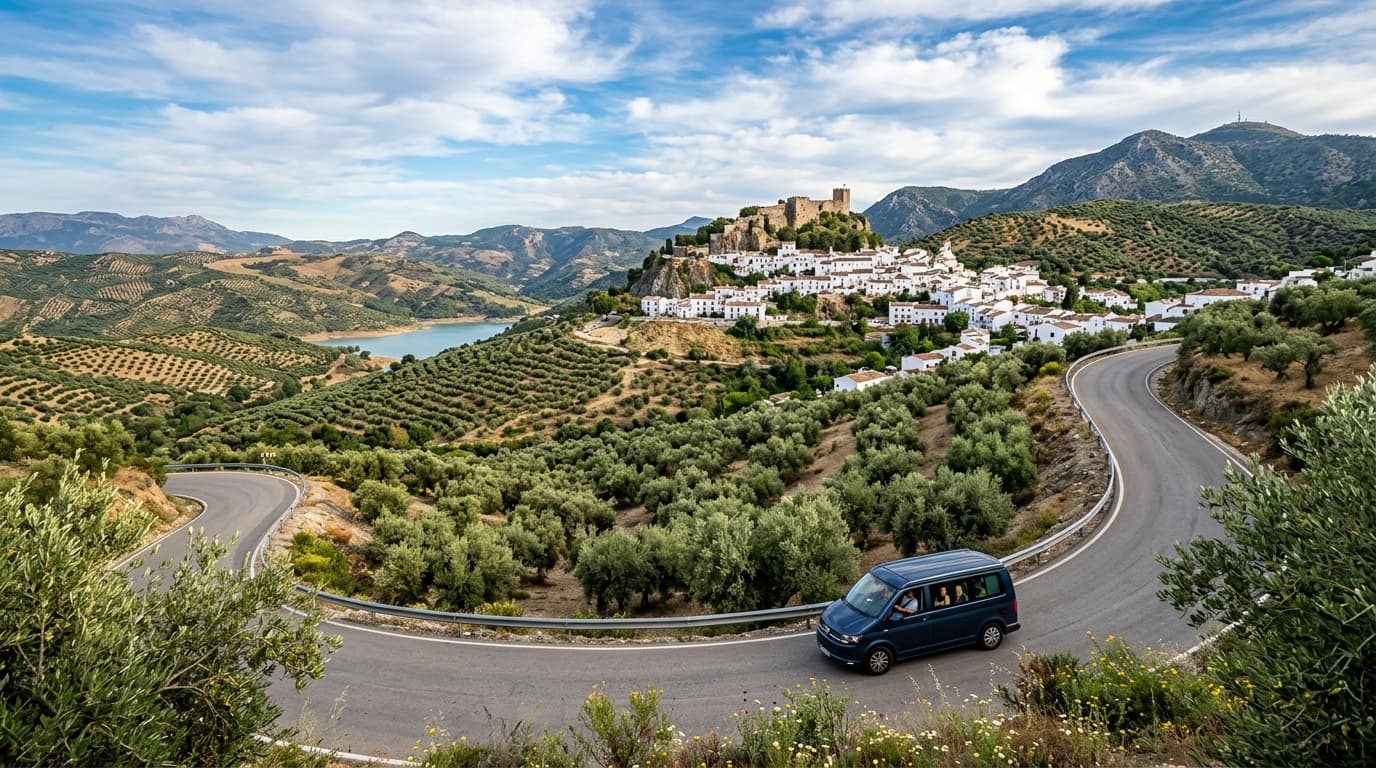
Andalusia Road Trip: The Perfect 10-Day Itinerary
Drive through southern Spain's most enchanting region with this 10-day Andalusia road trip covering Seville, Cordoba, Granada, and the coast.

Guide to Spanish Regional Cuisines: North vs South vs East
Discover Spain's distinct regional cuisines. Learn Basque pintxos, Andalusian gazpacho, Valencian paella & more with insider tips.

Spain Weather Guide: Seasons, Packing and Regional Differences
Complete guide to Spain's weather by season and region. Learn what to pack, best travel times, and how climate varies from coast to mountains.