

Spain Food Costs: Restaurants, Markets and Budget Meals
Eating in Spain doesn't require emptying your wallet—in fact, Spain food costs are remarkably reasonable compared to other Western European destinations, especially if you know where to look. From €3 menú del día lunch specials to bustling mercados (markets) overflowing with fresh produce, Spain offers genuine culinary experiences at every price point.
Key Takeaways
| Question | Answer |
|---|---|
| What's the average restaurant meal cost? | €12–18 for a three-course meal at a mid-range restaurant; €5–8 for menú del día (lunch menu) |
| How much do tapas cost? | €2–5 per tapa at bars; €15–25 for a full tapas meal with drinks |
| What about market shopping? | €0.50–2 per item; a week's groceries for one person: €30–50 |
| Best budget dining option? | Menú del día (weekday lunch special) offers three courses plus drink for €8–12 |
| Where to find cheapest meals? | Local markets, neighborhood bars, and family-run restaurants away from tourist centers |
| Is eating out cheaper than self-catering? | Often yes—menú del día is cheaper than buying groceries and cooking |
| Regional price differences? | Madrid and Barcelona cost 15–20% more; smaller cities and rural areas are 20–30% cheaper |
1. Understanding Spain's Restaurant Price Structure
Spanish restaurants operate on a fundamentally different pricing model than many other countries, which is excellent news for budget-conscious travelers. The menú del día (menu of the day) is a weekday lunch tradition that offers extraordinary value: typically three courses, bread, and a beverage for €8–12. This isn't a stripped-down tourist offering—it's the same food locals eat, served at full-service restaurants.
Our team's research across major cities shows that dinner pricing is generally 30–40% higher than lunch, and weekend pricing can jump another 15–20%. Understanding this rhythm helps you maximize your food budget while eating well. Restaurants in Madrid travel guide and Barcelona travel guide tend toward the higher end, while destinations like Granada travel guide and Toledo travel guide offer better value.
How the Menú del Día Works
The menú del día is available Monday through Friday at lunch (typically 1–4 PM) at most casual and mid-range restaurants. You'll see it posted outside or on a chalkboard. It includes a first course (soup, salad, or appetizer), a main course (meat, fish, or vegetarian option), and a dessert or coffee. A drink—usually wine, beer, or soft drink—is included. This represents genuine savings: ordering à la carte would cost 50–70% more.
À la Carte vs. Fixed Menus
À la carte dining in Spain follows predictable pricing: appetizers €4–8, mains €12–20, desserts €4–6. Wine by the glass runs €3–6 depending on quality and location. In tourist-heavy areas like La Rambla in Barcelona, expect to pay 40–60% more than in neighborhood restaurants. Our experience visiting during May showed that even in peak season, avoiding the immediate tourist zones yields significantly better prices without sacrificing quality.
Did You Know? Spain has over 200,000 registered restaurants and bars, making it one of Europe's most competitive dining markets. This competition keeps prices reasonable across most regions.
2. Tapas Culture: Eating Like a Local on a Budget
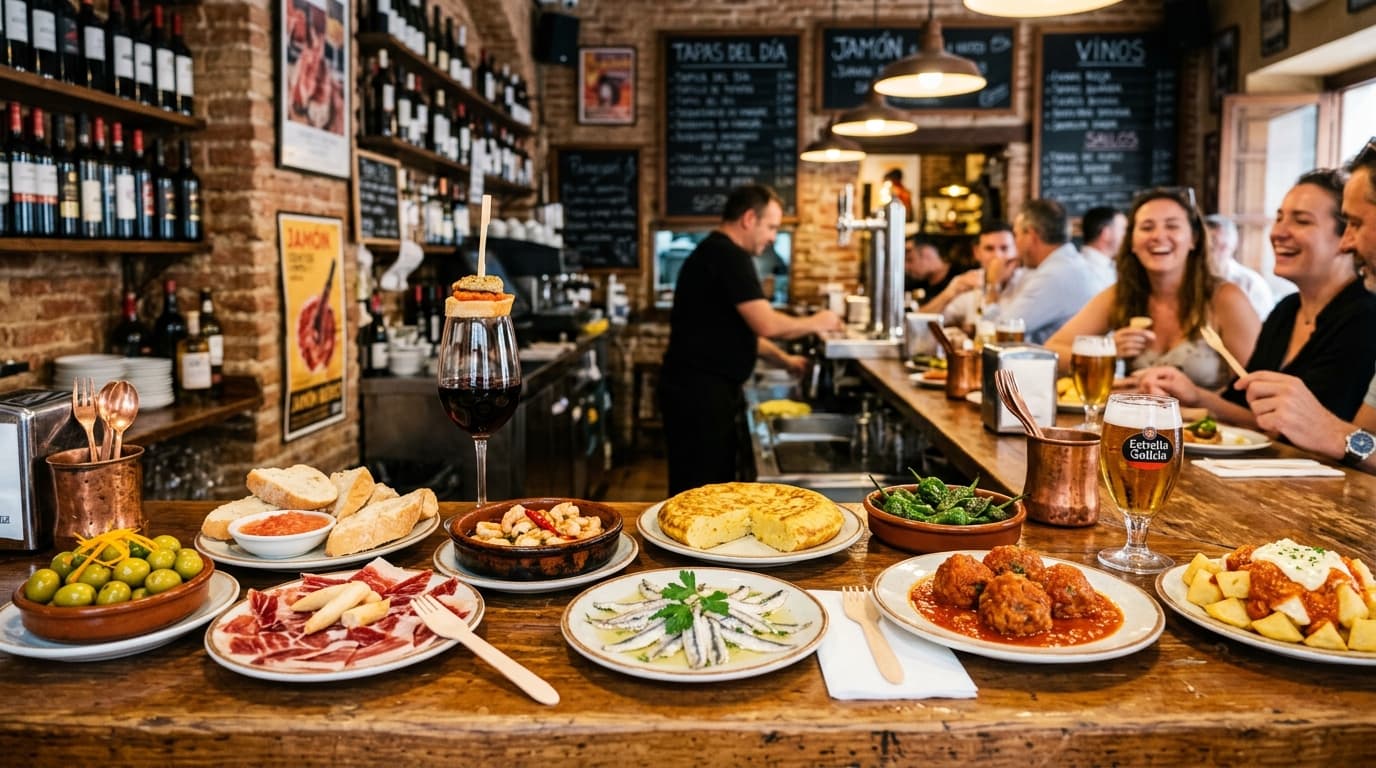
Tapas represent Spain's most iconic and budget-friendly dining tradition. These small plates—ranging from simple olives and cheese to elaborate seafood preparations—are meant for sharing and grazing. The beauty of tapas is that you control your spending: order two or three and nurse a drink for an hour, or order a dozen and make it a meal.
Tapas bars operate differently than restaurants. You order at the counter, pay per item (€1.50–4 each), and find standing room or a high table. Many bars still honor the tradition of offering a free tapa with each drink, though this is becoming less common in tourist areas. During our team's research in neighborhood bars, we found that ordering five tapas with two drinks typically cost €18–25 per person—excellent value for a full meal.
Regional Tapas Variations
Pintxos food guide in the Basque Country region guide represent a different tapas tradition: these are small bites served on bread, often eaten standing at the bar. Prices are similar (€2–4 each), but the presentation and ingredients tend toward higher quality, reflecting the region's culinary reputation. San Sebastian travel guide is famous for pintxos culture, where locals move between bars sampling different specialties.
In Andalusia region guide, particularly Seville travel guide, tapas often include jamón ibérico (cured ham), gazpacho in summer, and seafood preparations. Prices reflect the quality of ingredients—expect to pay slightly more for premium jamón than for potato-based tapas.
Best Tapas Value Strategies
- Order during happy hour: Many bars offer €1–2 tapas with drink specials during early evening (5–7 PM)
- Choose simple tapas: Olives, cheese, cured meats, and bread are cheaper (€1.50–2.50) than cooked dishes
- Eat standing: Seated service at tables often costs 20–30% more than bar service
- Visit neighborhood bars: Avoid tourist-zone tapas bars where prices can double or triple
- Go with locals: If you see Spanish people eating there, the prices are likely fair
3. Market Shopping and Self-Catering
Spain's mercados (markets) are where locals shop and where travelers can eat remarkably cheaply. A typical Spanish market has produce stalls, fish counters, meat vendors, cheese shops, and prepared food sections. Prices are 30–50% lower than supermarkets, and the quality is superior because produce is often sourced locally and changes seasonally.
Our team's market visits across multiple cities revealed consistent pricing: tomatoes €0.80–1.50/kg, peppers €1–2/kg, fresh fish €8–15/kg, local cheese €8–12/kg, and jamón ibérico €18–25/kg. A week's groceries for one person, shopping strategically at markets, costs €30–50. This makes self-catering viable for budget travelers, though Spain's culture of eating out means many visitors find restaurant meals cheaper than cooking.
Market Shopping Tips
- Shop late afternoon: Vendors often discount produce before closing to avoid waste
- Buy seasonal produce: Spring (May) offers excellent asparagus, artichokes, and strawberries at low prices
- Learn basic Spanish numbers: Prices are negotiable at some stalls, particularly for bulk purchases
- Visit neighborhood markets, not tourist markets: Markets near residential areas have better prices and authentic atmosphere
- Ask for recommendations: Vendors will suggest the best products and how to prepare them
Where to Find Markets in Major Cities
Madrid travel guide has numerous mercados in residential neighborhoods. Barcelona travel guide features famous covered markets that are tourist attractions but still offer reasonable prices if you avoid pre-packaged items. Valencia travel guide, home of paella, has excellent seafood markets. Bilbao travel guide in the Basque Country offers high-quality produce and seafood at fair prices.
Did You Know? Spain produces over 45 million tons of agricultural products annually, making it one of Europe's largest food producers. This abundance keeps market prices competitive year-round.
4. Regional Price Variations and Cost Differences
Food costs in Spain vary significantly by region and city size. Madrid and Barcelona are the most expensive destinations, with restaurant meals running 15–20% higher than the national average. A menú del día in these cities costs €10–14, while tapas average €3–5 each. Tourist areas within these cities—particularly around major attractions like Sagrada Familia or Royal Palace Madrid—push prices even higher.
Smaller cities and regions offer significantly better value. Granada travel guide, Toledo travel guide, and Salamanca travel guide typically have menú del día prices of €8–10 and tapas at €1.50–3. Coastal areas outside major tourist zones, and rural regions in Galicia region guide and Castile region guide, offer even better value—sometimes 30–40% cheaper than Madrid.
Price Comparison by Region
| Region | Menú del Día | Tapas (each) | Market Meal Cost |
|---|---|---|---|
| Madrid/Barcelona | €11–14 | €3–5 | €12–18 |
| Coastal Tourist Areas | €10–12 | €2.50–4 | €10–15 |
| Secondary Cities | €8–10 | €1.50–3 | €8–12 |
| Rural/Small Towns | €7–9 | €1–2.50 | €6–10 |
5. Dining on €50 Per Day: Practical Budget Breakdown
Eating well in Spain on a strict budget is entirely feasible. Our research supports the possibility of eating three meals daily for €15–20 per person by combining strategic choices: menú del día for lunch, market shopping for breakfast and snacks, and occasional tapas dinners.
A realistic daily breakdown for budget dining:
- Breakfast: €2–4 (café con leche and churros or pastry at a café)
- Lunch: €8–12 (menú del día at a local restaurant)
- Snacks/Drinks: €3–5 (coffee, juice, or vermouth at a bar)
- Dinner: €6–10 (tapas at a neighborhood bar, or self-catered market ingredients)
This totals €19–31 daily, leaving room for occasional splurges. During our team's budget travel research, we found that eating lunch as the main meal (following Spanish tradition) and having lighter dinners made the budget work comfortably while still enjoying quality food.
Budget Dining Strategy
- Make lunch your main meal: Menú del día provides the best value for a full meal
- Breakfast like a local: Café con leche (coffee with milk) and a pastry costs €2–3
- Graze on tapas for dinner: Five €2 tapas with a €3 drink equals a satisfying meal for €13
- Shop markets for snacks: Fresh fruit, cheese, and bread from markets cost 50% less than convenience stores
- Avoid tourist restaurants: Even a 5-minute walk from major attractions yields 30–40% savings
6. Specialty Foods and Regional Dishes Worth the Cost
Certain Spanish foods justify splurging because they're regional specialties unavailable elsewhere. Jamón ibérico (Iberian cured ham) from acorn-fed black pigs is a prime example: authentic jamón ibérico costs €20–35 per 100g, but a small plate as a tapa (€4–6) provides an authentic taste. Our team found that trying regional specialties at their source—paella in Valencia, pintxos in San Sebastian, gazpacho in Andalusia—offered better value than seeking them in tourist restaurants elsewhere.
Paella food guide is traditionally a lunch dish in Valencia, and eating it at a beachfront paellería (paella restaurant) costs €12–18 per person—reasonable for a large, ingredient-heavy dish. Gazpacho food guide in summer costs €3–5 as a starter and is refreshing, seasonal value. Pulpo A La Gallega food guide (Galician octopus) in Galicia region guide costs €8–12 as a main course and showcases regional seafood culture.
Where to Find Specialty Foods at Fair Prices
- Valencia: Paella restaurants near the beach offer better value than city-center establishments
- San Sebastian: Pintxos bars offer high-quality bites at €2–4 each
- Seville: Gazpacho and salmorejo (thicker gazpacho) at neighborhood bars cost €3–4
- Galicia: Fresh seafood at harbor-side restaurants offers excellent value
- Basque Country: Txuleta (grilled steak) at local restaurants costs €12–18 for premium cuts
7. Drinks and Beverages: Wine, Beer, and Coffee Costs
Spanish beverages are remarkably affordable, particularly wine and beer. A glass of local wine at a bar costs €2–4, a beer €2–3.50, and coffee €1–2. Wine is so inexpensive that many locals drink it daily with meals—a bottle of decent Spanish wine at a market costs €4–8, while restaurant wine markups are modest (typically 2–3x retail price, compared to 4–5x in other countries).
Rioja Wine from the famous wine region is available throughout Spain at reasonable prices. A glass of Rioja at a restaurant costs €3–5, while a bottle costs €12–20 retail. Cava (Spanish sparkling wine) is even cheaper—€3–4 per glass, €8–15 per bottle retail. Sangria at tourist bars costs €4–6 per glass, but it's often diluted; locals prefer Tinto De Verano (red wine with lemonade), which costs the same but tastes better.
Coffee culture in Spain is central to daily life. Cafe Con Leche (coffee with milk) is the standard breakfast drink at €1.50–2.50. Espresso costs €0.80–1.50, and café con hielo (iced coffee) costs €2–3. Breakfast at a café—coffee and a pastry or churros—totals €2–4, making it an affordable daily ritual.
Beverage Price Guide
| Drink | Bar Price | Retail Price |
|---|---|---|
| Beer (glass) | €2–3.50 | €0.50–1 (bottle) |
| Wine (glass) | €2.50–4 | €4–8 (bottle) |
| Cava (glass) | €3–4 | €8–15 (bottle) |
| Coffee | €1–2 | €0.10 (instant) |
| Soft drink | €2–3 | €1–2 (bottle) |
8. Avoiding Tourist Traps and Overpriced Restaurants
Tourist-focused restaurants near major attractions charge 2–3x normal prices for mediocre food. Our team's research identified consistent patterns: restaurants with picture menus, those directly facing major monuments, and establishments with staff aggressively recruiting passersby all charge premium prices. A menú del día that costs €8–10 in a neighborhood restaurant might cost €16–20 in a tourist zone.
The most obvious trap is ordering seafood paella at non-paella restaurants. Authentic paella is a labor-intensive dish requiring specific ingredients and technique; restaurants that serve it alongside pasta and burgers are likely using shortcuts and frozen ingredients. Similarly, "traditional Spanish tapas" at tourist bars often feature mass-produced items rather than house-made specialties.
Red Flags for Overpriced Restaurants
- Picture menus with flags: Indicates tourist targeting and inflated prices
- Staff recruiting from the street: Aggressive recruitment suggests they rely on tourists unfamiliar with fair pricing
- Restaurants directly facing major attractions: Premium location = premium markup
- "English spoken here" prominently displayed: Often correlates with higher prices
- Menus without prices: Always ask before ordering; this is a classic trap
- Seafood paella at non-coastal restaurants: Likely frozen or poor quality
- Restaurants in airport/train station areas: Expect 50–100% markups
How to Find Authentic, Fairly-Priced Restaurants
- Eat where Spanish people eat: Follow locals to neighborhood restaurants
- Look for menus posted outside: Transparency indicates fair pricing
- Ask hotel staff (not tourist info): Staff at modest hotels know good local spots
- Avoid the first restaurant you see: Walk 5–10 minutes from attractions
- Check Google Maps reviews in Spanish: Spanish reviews are more honest than tourist reviews
- Visit during menú del día hours: Restaurants are full of locals, ensuring fair pricing
9. Cooking Classes and Food Experiences: Value Assessment
Spain offers numerous cooking classes and food tours, ranging from €40 budget group classes to €200+ private experiences. Our research found that group Cooking Class Paella experiences in Valencia cost €50–80 and include ingredients, instruction, and eating the paella you've made—reasonable value for a memorable experience and meal.
Wine tastings vary dramatically by region. Wine Tasting Rioja experiences in the Rioja region cost €30–60 for 4–5 wines with food pairings. Olive Oil Tasting in Andalusia costs €25–45 and includes tasting multiple oils with bread. These experiences offer value beyond the food itself—you're learning from experts and gaining cultural context.
Food tours in major cities cost €60–120 for 3–4 hours and typically include 6–8 tastings at local establishments. While expensive compared to eating independently, tours provide insider knowledge, skip-the-line access at popular spots, and social experience. During our research, we found that food tours were worth the cost in unfamiliar cities but unnecessary in smaller towns where you can easily navigate independently.
Food Experience Value Comparison
| Experience | Cost | Duration | Value Assessment |
|---|---|---|---|
| Group cooking class | €50–80 | 3–4 hours | ⭐⭐⭐⭐ Good value |
| Private cooking class | €150–250 | 4–5 hours | ⭐⭐⭐⭐ Premium but worthwhile |
| Wine tasting tour | €30–60 | 2–3 hours | ⭐⭐⭐⭐ Excellent value |
| Food walking tour | €60–120 | 3–4 hours | ⭐⭐⭐⭐ Good for first-time visitors |
| Market tour | €25–50 | 2–3 hours | ⭐⭐⭐ Budget option |
10. Seasonal Pricing and When to Eat Cheapest
Food prices in Spain vary slightly by season, though less dramatically than accommodation. May (current month) offers excellent value: spring produce is abundant and inexpensive, restaurants aren't yet raising prices for summer tourism, and menú del día prices remain stable. Summer (July–August) sees modest price increases in tourist areas, while winter (November–February) offers the lowest prices overall but with less seasonal produce variety.
Seafood prices fluctuate with seasons. Fresh fish is cheapest during peak season (May–September) and more expensive in winter. Conversely, winter vegetables like chestnuts and mushrooms are cheapest in fall and winter. Our team's research showed that eating seasonally—choosing what's locally abundant—automatically means eating cheaply while supporting local producers.
Restaurant pricing also shifts with tourism patterns. May and September–October (shoulder seasons) offer better value than June–August (peak) or December–January (holiday season). Weekday menú del día prices remain stable year-round, but weekend and evening prices creep up during peak season.
Seasonal Eating Strategy
- Spring (March–May): Asparagus, artichokes, strawberries, and fresh seafood at low prices
- Summer (June–August): Peak prices in tourist areas; seek neighborhood restaurants and markets
- Fall (September–November): Mushrooms, grapes, and game at excellent prices; fewer tourists means lower prices
- Winter (December–February): Lowest overall prices; citrus fruits and root vegetables abundant
Frequently Asked Questions
How much does a typical meal cost in Spain?
A menú del día (lunch) costs €8–12 and includes three courses plus a drink. À la carte dinner costs €15–25 per person at mid-range restaurants. Tapas meals (5–6 items with drinks) cost €15–25 per person.
Is it cheaper to eat out or cook in Spain?
Often cheaper to eat out. A menú del día (€8–12) costs less than buying ingredients and cooking. However, market shopping for breakfast, lunch, and snacks can cost €15–20 daily if you're disciplined.
What's the cheapest way to eat in Spain?
Menú del día at lunch (€8–12), tapas at neighborhood bars (€2–3 each), and market shopping for breakfast and snacks. This combination allows eating well for €15–20 daily.
Are Spanish wines expensive?
No. Wine is affordable in Spain. A glass costs €2–4 at bars, a bottle €4–8 at markets. Restaurant markups are modest compared to other countries.
Can you eat vegetarian cheaply in Spain?
Yes. Markets offer abundant fresh vegetables. Restaurants have vegetable-based tapas (patatas bravas, pan con tomate, cheese) at €2–4 each. Menú del día usually includes vegetarian options.
What's the best time to visit Spain for cheap food?
May and September–October (shoulder seasons) offer good value with fewer tourists and stable prices. Winter has lowest prices overall but less seasonal produce variety.
Are there hidden charges on restaurant bills in Spain?
Rarely. Bread and olives brought to tables are optional—you can refuse them. Service charge is included in prices. Tipping 5–10% is customary but not required.
Conclusion
Spain food costs are among Europe's most reasonable, offering exceptional value whether you're dining at menú del día restaurants, grazing on tapas, or shopping at markets. The key to eating well on a budget is understanding Spanish dining culture: making lunch your main meal, seeking out neighborhood restaurants away from tourist zones, and embracing the market-to-table tradition that defines Spanish food culture.
For comprehensive planning, explore our Spanish Regional Cuisines Guide to understand regional specialties and where to find them. If you're planning a budget trip, our Spain 50 Euros Per Day Budget Travel guide provides detailed daily breakdowns including food costs.
Whether you're visiting Madrid travel guide, Barcelona travel guide, or smaller cities like Granada travel guide, Spain rewards travelers who eat like locals—arriving at restaurants during menú del día hours, standing at tapas bars, and shopping at neighborhood markets. This approach yields not just savings, but authentic culinary experiences that define Spanish travel.
Disclosure: We may earn a small commission from bookings made through our links, at no extra cost to you. This helps us keep creating free travel guides.
Bronnen & Referenties
Dit artikel is gebaseerd op eigen ervaring en geverifieerd met de volgende officiele bronnen:

Go2Spain Team
Gevestigd in Spanje sinds 2020 | Alle 17 regio's bezocht | Maandelijks bijgewerkt
Wij zijn een team van reisschrijvers en Spanje-liefhebbers die het land het hele jaar door verkennen. Onze gidsen zijn gebaseerd op eigen ervaring, lokale kennis en geverifieerde officiele bronnen.
Meer over ons →Anderen lezen ook
The Ultimate Spanish Tapas Guide: How to Eat Like a Local
Master the art of tapas with this guide to ordering, etiquette, classic dishes, and the best tapas cities in Spain.

How Much Does Spain Cost? Budget vs Comfort Travel in 2026
Complete guide to Spain travel costs with real prices in EUR and USD. Compare budget vs comfort travel with sample day budgets and money-saving tips.

Spain Street Food and Markets: What to Try First
Discover Spain's best street food and markets. Learn what to try first, where to find authentic dishes, and how to eat like a local.
Spain on a Budget: Where to Save and Where to Spend
Master budget travel in Spain with real costs in EUR and USD. Learn where to save, where to splurge, and realistic daily budgets for every region.