
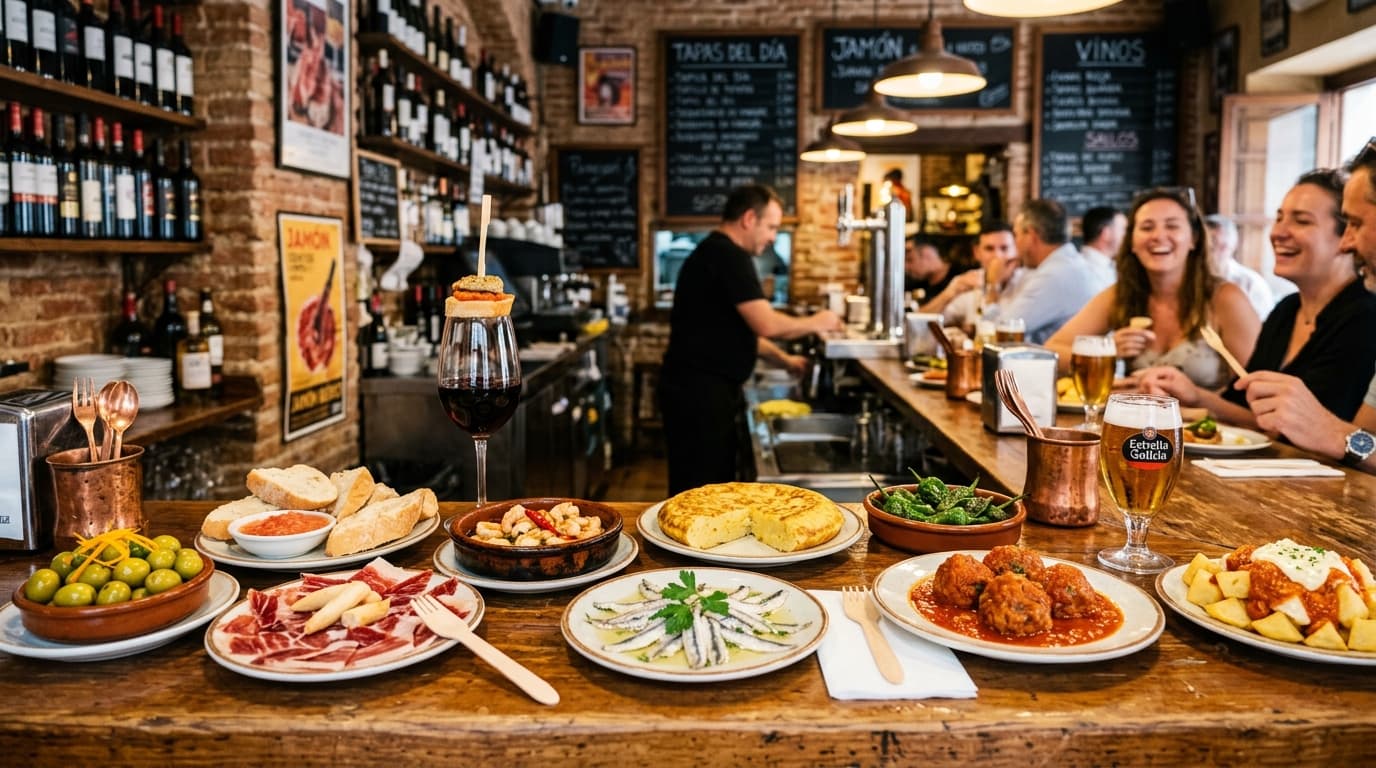
The Ultimate Spanish Tapas Guide: How to Eat Like a Local
Tapas are far more than just small plates of food -- they are a way of life in Spain. Understanding tapas culture will transform your dining experience and connect you with one of Spain's most beloved traditions.
The History of Tapas
The origin of tapas is debated, but the most popular legend involves King Alfonso XIII stopping at a bar in Cadiz where the bartender placed a slice of ham over his glass to protect the sherry from sand. "Tapa" literally means "lid" or "cover." Regardless of the true origin, tapas evolved from simple bar snacks into an art form.
How Tapas Work
Tapas come in three sizes: tapa (small, sometimes free with a drink), media racion (half portion for sharing), and racion (full portion). In many bars, you can point at what you want from the display behind the counter. The classic tapas experience involves ir de tapas (going from bar to bar), having one or two dishes and a drink at each place before moving on.
Essential Tapas Dishes
Patatas Bravas: Fried potato cubes with spicy tomato sauce and sometimes aioli. Every bar has its own version. Tortilla Espanola: Thick potato and egg omelette, served in wedges. The debate over whether to include onion is serious business. Gambas al Ajillo: Prawns sizzling in garlic-infused olive oil, served in a clay dish with bread for dipping.
Croquetas: Creamy bechamel fritters, often filled with jamon, mushroom, or salt cod. Homemade versions are far superior to frozen ones. Jamon Iberico: Paper-thin slices of acorn-fed cured ham, often simply served on a plate. Pimientos de Padron: Small green peppers fried in olive oil and sprinkled with sea salt. Most are mild, but one in ten brings unexpected heat.
Boquerones en Vinagre: Fresh anchovies marinated in vinegar and garlic. Pulpo a la Gallega: Galician-style octopus with paprika, olive oil, and potatoes. Albondigas: Meatballs in tomato sauce, a hearty classic.
Best Tapas Cities
Granada is famous for generous free tapas with every drink. Seville offers traditional Andalusian tapas in atmospheric bars. Madrid has an incredible variety in neighborhoods like La Latina and Lavapies. San Sebastian elevates the concept with artistic pintxos. Leon serves free tapas in the Barrio Humedo neighborhood.
Tapas Etiquette
Dropping napkins on the floor is not rude -- it is actually a sign of a good tapas bar (though this tradition is fading). Standing at the bar is often cheaper than sitting at a table. Ordering is casual; catch the bartender's eye and simply point or ask. Tipping is not expected but rounding up is appreciated. The bill (la cuenta) comes at the end, never split per item.
When to Go
Tapas time varies by region. In Andalusia, the early evening paseo (walk) around 8-9 PM segues into tapas. In Madrid, after-work tapas start around 7 PM. Weekend lunch tapas from 1-3 PM are also common. Do not arrive at a tapas bar before 8 PM on a weekend night expecting a crowd -- the action starts later.
Tapas embody everything wonderful about Spanish culture: the joy of sharing, the emphasis on quality ingredients simply prepared, and the belief that eating should always be a social occasion.

Go2Spain Editorial Team
Gevestigd in Spanje sinds 2020 | Alle 17 regio's bezocht | Maandelijks bijgewerkt
Wij zijn een team van reisschrijvers en Spanje-liefhebbers die het land het hele jaar door verkennen. Onze gidsen zijn gebaseerd op eigen ervaring, lokale kennis en geverifieerde officiele bronnen.
Meer over ons →Anderen lezen ook
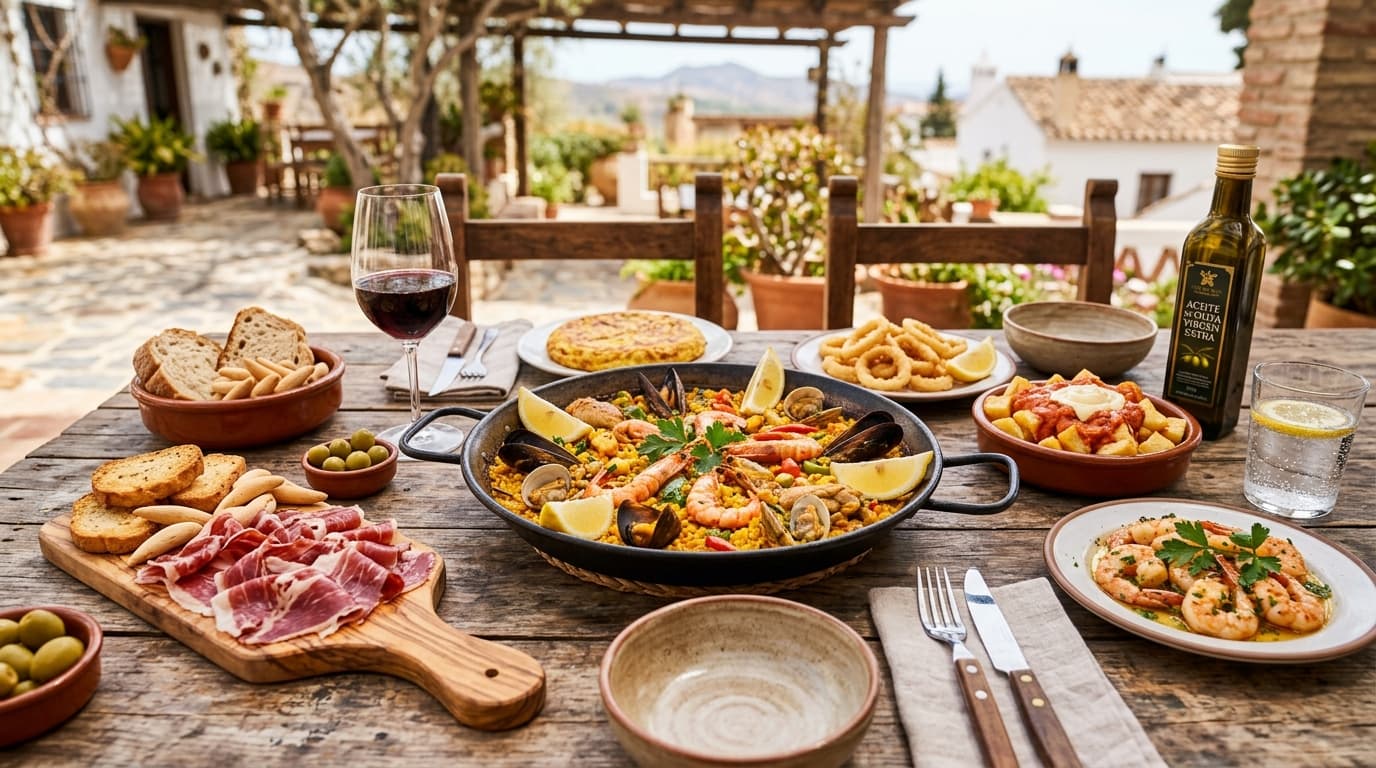
Spanish Food Guide: Must-Try Dishes and Where to Find Them
From paella to pintxos, discover the essential dishes of Spanish cuisine and the best regions to taste them.

Spain Food Costs: Restaurants, Markets and Budget Meals
Complete guide to Spain food costs: restaurant prices, market shopping, budget meals, and how to eat like a local without breaking the bank.

Top Museums in Spain: A Culture Lover's Guide
From the Prado to the Guggenheim, explore Spain's world-class museums and galleries. Tips on free entry, must-see works, and hidden gems.

Spain Street Food and Markets: What to Try First
Discover Spain's best street food and markets. Learn what to try first, where to find authentic dishes, and how to eat like a local.