
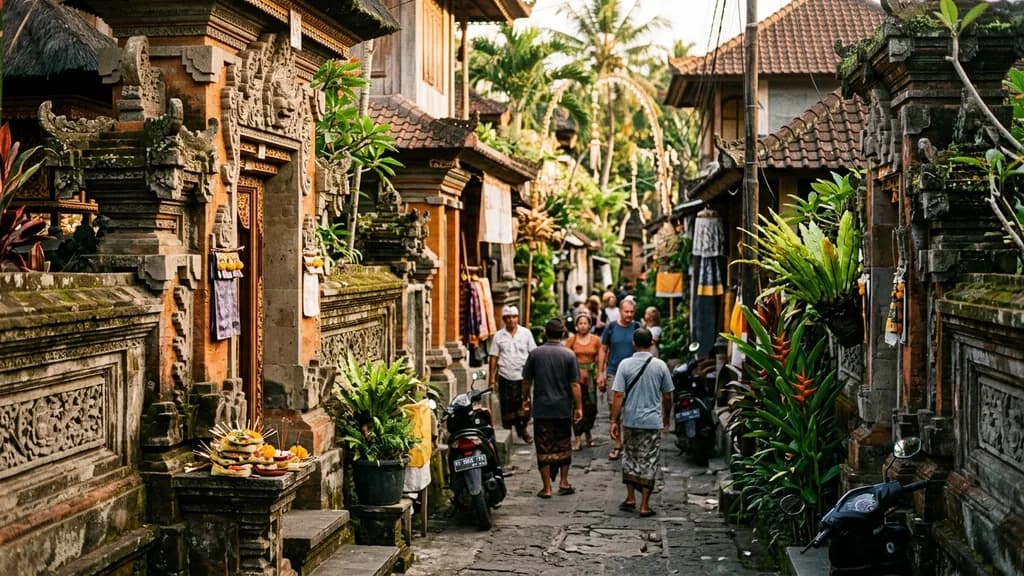
Is Barcelona Safe for Tourists in 2026? Pickpockets, Scams & Real Risks
Is Barcelona Safe for Tourists in 2026? Pickpockets, Scams & Real Risks
Let's skip the fluff. Barcelona is not going to put your life in danger. It is, however, going to try very hard to separate you from your phone, your wallet, and your sense of dignity on La Rambla. In 2026, Barcelona still holds the deeply uncomfortable title of Europe's pickpocket capital, and Europol data suggests roughly 6 in every 100 tourists will experience some kind of property crime during their stay. That is not a typo. That is a genuine, measurable risk you should plan around.
This guide gives you the honest answer most travel sites refuse to write. We'll cover what official advisories actually say, where the pickpocket hotspots really are, how the classic La Rambla scams work, the truth about the anti-tourism protests you've seen on social media, which metro lines to treat with caution, and what to do if something does happen. If you take ten minutes to read this before you fly, your trip will go smoother than 90% of the tourists stepping off that plane beside you.
This article may contain affiliate links, and we earn a small commission at no extra cost to you.
TL;DR: The Real Barcelona Safety Picture in 2026
| Risk category | Reality check |
|---|---|
| Violent crime against tourists | Very low. Homicide and assault targeting visitors are rare. |
| Pickpocketing | Highest rate in the EU. Roughly 6 per 100 tourists per Europol. |
| Scams on La Rambla | Extremely common. Avoid all unsolicited contact. |
| Metro safety | Infrastructure safe. L3 green line has heavy pickpocket activity. |
| Anti-tourism protests | Symbolic, not violent. Ignore the TikToks. |
| Night safety | Tourist core fine. El Raval and deep Poble-sec sketchier post-2 AM. |
| Solo female travel | Generally safe. Catcalling exists, serious threats rare. |
| Beach theft (Barceloneta) | Very high. Never leave bags unattended, not even for 30 seconds. |
The short version: be paranoid about your bag, not your body. Barcelona's problem is property crime, not safety of life.
What Official Travel Advisories Actually Say
A lot of travel content oversimplifies this. Here is what the main English-speaking governments currently say about Spain in 2026.
The US Department of State lists Spain at Level 2: Exercise Increased Caution, primarily due to terrorism concerns that apply to all of Europe and petty crime in tourist areas. Spain has sat at Level 2 for years. This is the same rating as France, Germany, and Italy. It is not a warning. It is a standard European advisory.
The UK Foreign, Commonwealth & Development Office (FCDO) issues no broad warning against travel to Spain. The FCDO guidance specifically calls out Barcelona, Madrid, and the Costa del Sol as areas with higher rates of street theft, and recommends the usual precautions around ATMs, public transport, and crowded tourist sites.
The Australian DFAT classifies Spain as "Exercise Normal Safety Precautions," their lowest tier. DFAT specifically flags Barcelona's metro and beach zones for opportunistic theft.
Nothing in any of these advisories suggests Barcelona is a dangerous city in the violent-crime sense. What they all agree on is that if you're casual about your belongings, someone will almost certainly take them.
The Pickpocket Reality: Why Barcelona Leads the EU
Europol's most recent European Crime Report places Barcelona at the top of EU cities for tourist-targeted pickpocketing. The estimated rate of roughly 6 incidents per 100 visitors is well above Paris, Rome, Prague, and Amsterdam. A few reasons drive this:
1. Decriminalization of petty theft under €400. Under Spanish law, theft below €400 (about $430 USD) is classified as a misdemeanor, not a felony. Repeat offenders can be arrested dozens of times in a single year and be back on the street within hours. Local police are open about the frustration this creates.
2. Organized pickpocket networks. This isn't one person with sticky fingers. Teams of 3 to 5 operate in coordinated rotations: one distracts, one lifts, one receives and disappears. Groups work specific metro lines and La Rambla blocks on rotating schedules.
3. Overtourism density. Barcelona receives more than 12 million international visitors per year in a compact city center. The sheer density of distracted, map-staring, phone-waving tourists is a target-rich environment unlike anywhere else in Europe.
4. Tourist predictability. Visitors cluster in the same 6 or 7 zones. Thieves don't need to search for targets. They wait where the targets always are.
This is useful context because it tells you something important: pickpocketing in Barcelona is not random. It is industrial. You counter it with systems, not luck.
Top 6 Pickpocket Hotspots in Barcelona
Based on Guardia Urbana incident data and firsthand reporting from travel forums, these are the zones where you need to be at peak awareness. If you're in any of these six places, assume someone is watching you.
| Hotspot | Typical tactic | Risk level |
|---|---|---|
| La Rambla (especially near Plaça Reial) | Distraction crews, fake petitioners, 3-card monte | Extreme |
| Sagrada Família metro (L2 / L5) | Bumping on escalators, bag slashing in queues | Extreme |
| L3 green line (Passeig de Gràcia ↔ Sagrada) | Crowded-car lifts, phone grabs at doors | Very high |
| Barceloneta beach | Swim-and-grab, towel theft, fake massage sellers | Very high |
| Plaça Catalunya | Petition signers, map scammers, bus-stop lifts | Very high |
| Park Güell entrance | Queue distraction, backpack opening | High |
La Rambla deserves a special note. It is not dangerous, but it is the single most scammed street in Spain. If you need to walk it, walk it purposefully, keep your phone in a front pocket or a zipped crossbody bag, and refuse every unsolicited interaction. Everyone who approaches you on La Rambla wants something. That is not cynicism, that is math.
La Rambla Scams: Every One You'll See
You will see some version of every scam in this section during a single afternoon on La Rambla. None of them will threaten your physical safety, but all of them are designed to either reach into your pocket or extract cash under social pressure.
3-card monte / shell game. A man has three cups or cards. He shuffles them. Someone in the crowd (a plant) "wins" loudly. You feel lucky. You bet. You lose. The game is 100% rigged, the plants are part of the crew, and lookouts watch for police. Never play.
Petition signers. Usually young women with clipboards asking you to sign a petition about deaf children, disabled rights, or refugees. While you focus on the clipboard, an accomplice works your bag. The petition is fake. The cause is fake. Walk away.
Friendship bracelet / flower ladies. A man grabs your wrist and ties a string bracelet on it before you can react, then demands €10 to €20. A woman pins a carnation to your shirt and demands the same. Once the item is on you, they claim payment is owed. Firm "no" and keep walking. Do not let them touch your wrist in the first place.
Fake tour guides. Someone approaches with a lanyard and offers a "free" walking tour of the Barri Gòtic. Halfway through, they demand aggressive tips and steer you toward cafés that pay kickbacks. Book real tours online through reputable platforms.
ATM helpers. You're at an ATM on La Rambla. A friendly stranger offers to help you find the English menu. They're reading your PIN. Use ATMs inside bank branches only, never street-side machines on tourist drags.
Restaurant overcharging. Not a scam per se, but La Rambla restaurants routinely add "bread charges," "cover charges," and mystery line items. Always ask for the menu with printed prices before ordering, and double-check the bill before paying.
| Scam | Typical "ask" | How to shut it down |
|---|---|---|
| 3-card monte | €20 to €200 "bet" | Don't stop walking |
| Petition signers | Clipboard distraction | Say "no" and keep hands on bag |
| Friendship bracelet | €10 to €20 after wrist grab | Keep wrists moving, don't stop |
| Flower ladies | €5 to €20 after pinning | Refuse the flower instantly |
| ATM helper | Steals PIN + card clone | Use bank-branch ATMs only |
| Fake tour guide | Aggressive tips + kickback café | Pre-book on verified platforms |
The Anti-Tourism Protests: What They Actually Are
In 2024 and 2025, international media ran footage of Barcelona residents spraying water guns at tourists on La Rambla, hanging "tourists go home" banners, and chanting outside Airbnb buildings. In 2026, the protests continue periodically. Let's cut through the noise.
These protests are a real political movement driven by a real grievance: Barcelona's housing crisis, in which short-term rentals and tourist pressure have made the city unaffordable for locals. The anger is valid. The city has pledged to phase out all 10,000+ tourist apartment licenses by 2028. The protests are a pressure campaign, not a random outburst.
From a tourist safety perspective, here is what matters: no one has been injured. The water guns are symbolic. The banners are symbolic. The chants are loud but not threatening. You will not be attacked. Waitstaff will still serve you. Hotels will still welcome you. You might get a cold water spray if you're walking La Rambla during a protest, and you will see graffiti on building facades. That's the extent of it.
If you want to be respectful: don't photograph protesters mockingly, don't argue with them, don't post smug "triggered locals" content. Most Barcelonans (including the ones protesting) are welcoming to individual tourists. They are angry at systems, not at you personally.
Metro Safety: Which Lines to Watch
The Barcelona metro (TMB) is one of Europe's best. Frequent, clean, cheap at about €2.65 ($2.85 USD) per single ticket or €12.55 ($13.50 USD) for a 10-trip T-casual card. Structurally it is extremely safe. The problem, again, is pickpocketing.
L3 (green) is the worst line for theft. The stretch between Passeig de Gràcia and Sagrada Família is the single most-worked pickpocket corridor in the Barcelona system. Platforms are crowded, cars pack tight, and every tourist is heading to the same two stations. If you can avoid this line during peak tourist hours, do.
L2 (purple) has heavy activity around Sagrada Família station. Escalators and ticket-machine zones are the specific danger points.
L5 (blue) also serves Sagrada Família and has similar issues at that station.
L1 (red) is generally the safest of the central lines, less tourist-heavy.
L4 (yellow) is moderate. Mostly commuters, but watch crowded interchange stations like Passeig de Gràcia.
Practical rules: never stand near the doors with a phone in your hand at a station stop (classic grab-and-run), never put your phone or wallet in a back pocket or outer backpack pocket on any line, avoid mostly empty cars late at night (choose cars with other passengers), and use a zipped crossbody bag worn across your chest, not a tote or open shoulder bag.
Beach Safety at Barceloneta and Nova Icaria
Barcelona's beaches are beautiful. They are also a pickpocket's dream. The specific threat here is the swim-and-grab: you leave your bag on a towel, wade into the Mediterranean, and by the time you turn around your phone, wallet, and sometimes the bag itself are gone. A crew watches swimmers and moves the instant people commit to the water.
Rules that actually work:
- Never leave anything unattended, not for any period of time. "Just a quick dip" is how it happens.
- Travel to the beach with a buddy and take turns swimming.
- Use a beach-safe waterproof pouch around your neck for keys, card, and phone. They cost about $15 USD on Amazon and are the single best beach investment you'll make.
- The beach bars (chiringuitos) are generally safer because there are eyes on you. The stretches of open sand between them are not.
- Leave your passport at the hotel. You only need it for flights, not for lying on the sand.
- Be wary of aggressive massage and mojito sellers who approach your towel. Most are harmless, but some double as spotters for theft crews.
If you are serious about a beach day, a chiringuito with table service, a locker at a beach club like W Hotel's day passes, or a smaller beach outside the tourist core (Ocata, Castelldefels) all reduce risk meaningfully.
Night Safety: Where to Walk, Where to Uber
Barcelona's nightlife core (Barri Gòtic, El Born, Eixample, Gràcia) is genuinely safe to walk at night. Streets are busy until 2 or 3 AM, restaurants are still serving food past midnight, and the police presence is visible. Solo travelers, including women, generally have no issues in these zones.
The picture changes slightly in a few specific neighborhoods after 2 AM:
El Raval (west of La Rambla) has gentrified significantly but still has a higher concentration of drug activity, aggressive panhandling, and street sex work. Not dangerous to walk through with normal awareness, but not a neighborhood to wander lost at 3 AM.
Deep Poble-sec (away from the restaurant street Carrer de Blai) gets quiet and occasionally sketchy late at night. Stay on the main artery.
Around Sants station after midnight is workable, but not charming. If you're coming in on a late train, take a metered cab.
Park Güell and Carmel area after dark closes and empties. Don't be wandering up there at night.
For everywhere else in the central city, walk or take the metro until around 11 PM. After that, Uber, Bolt, and Free Now (taxi-hailing app) all work in Barcelona and are reliable. A typical late-night ride within the city is €8 to €15 ($8.60 to $16 USD).
The 7-Item Scam-Proof Checklist
This is the pre-trip checklist I'd hand to my own family. If you do these seven things, your realistic risk of becoming a pickpocket statistic drops dramatically.
- Money belt for passport and backup card only. Worn under clothes, not visible. Pull it out only in your hotel room.
- Phone in a front pocket or zipped crossbody bag. Never in a back pocket. Never in an outer backpack pocket. Ever.
- Never respond to unsolicited strangers. Not for petitions, directions (you can use Google Maps), bracelets, flowers, tour offers, or "hey where are you from." Polite firm "no" and keep moving.
- Bank-branch ATMs only. Inside actual bank offices during daytime hours. Avoid street-facing ATMs on La Rambla, Plaça Catalunya, and Passeig de Gràcia.
- Double-check every restaurant bill. Especially on La Rambla and near Sagrada Família. Ask for the printed menu, confirm prices before ordering, inspect the bill line by line.
- Metered taxis or app-based rides only. Never unmarked cars. Never "my friend will give you a ride." Barcelona taxis are regulated, black-and-yellow, and have meters.
- Travel insurance that covers theft. Most credit cards do not. A proper travel insurance policy will reimburse stolen electronics, wallets, and documents if you file a police report within 24 hours. This is the single most cost-effective safety purchase for Barcelona.
Solo Female Travel in Barcelona
Barcelona is considered one of the safer major European cities for solo female travelers. Catcalling exists, as it does in most southern European cities, but it is typically mild and not escalating. Violent incidents targeting solo women are rare relative to the volume of visitors.
Practical notes: the nightlife areas of El Born and Gràcia are relaxed and female-friendly, most bars and restaurants are used to solo diners and don't make it awkward, and metro cars have visible emergency contact points. If you're uncomfortable, any chiringuito staff, hotel reception, or Guardia Urbana officer will help. The main risk is the same one everyone faces: property theft, not personal safety.
If you want more security, female-only dorms at reputable hostels, daytime walking tours run by women-led operators, and well-reviewed Airbnb hosts with professional check-in procedures all work well.
What to Do If You Get Pickpocketed
Step-by-step, the moment you realize something is gone:
1. Freeze your credit cards immediately. Use your bank's mobile app (most have a one-tap freeze) or call the emergency number on the back of a backup card. Every minute matters.
2. File a police report (denuncia) at Mossos d'Esquadra. The Mossos d'Esquadra is the Catalan regional police force, not to be confused with Guardia Urbana (local city police) or Policia Nacional. For tourist theft, Mossos handles the report. Main tourist-friendly station: Nou de la Rambla 76-80, open 24/7 with English-speaking officers. You can also start the report online in English through the Mossos website and complete it in person later.
3. Get the police report number. You cannot file a travel insurance claim without it. Request an official paper copy or PDF before leaving the station.
4. Contact your embassy if your passport was taken. The US Embassy in Madrid is at +34-91-587-2200 and can issue emergency passports. The UK Consulate in Barcelona handles British passports directly.
5. Replace your phone's SIM remotely. Most US carriers (Verizon, T-Mobile, AT&T) can ship a replacement eSIM activation to your email if you have your laptop or a friend's device.
6. File the insurance claim within the policy window. Most policies require filing within 21 to 30 days with police report attached.
Barcelona's tourist help line (+34 93 285 38 32) also offers multi-language support, hotel referrals, and assistance with the police report process. It's underused but genuinely helpful.
Emergency Contacts in Barcelona
| Service | Number | When to call |
|---|---|---|
| EU Emergency (all services) | 112 | Fire, ambulance, police, life-threatening |
| Guardia Urbana (local police) | +34 092 | Non-emergency local issues |
| Mossos d'Esquadra (Catalan police) | +34 088 | File a theft report (denuncia) |
| Barcelona Tourist Helpline | +34 93 285 38 32 | Multi-language tourist support |
| US Embassy Madrid | +34 91 587 2200 | Lost passport, consular emergencies |
| UK Consulate Barcelona | +34 93 366 6200 | Lost passport, consular emergencies |
| Medical emergency (SEM) | 061 | Ambulance specifically |
Save 112 in your phone before you fly. It works from any mobile, in any EU country, and English-speaking operators are standard.
Barcelona vs Madrid vs Rome: How It Stacks Up
If you're choosing between European city breaks based partly on safety, here's the honest comparison.
| Category | Barcelona | Madrid | Rome |
|---|---|---|---|
| Violent crime (tourists) | Very low | Very low | Very low |
| Pickpocket rate (est.) | ~6 per 100 | ~2 per 100 | ~3 per 100 |
| Scam pressure | Extreme (La Rambla) | Low | Moderate |
| Metro theft | High (L3) | Low-moderate | Moderate |
| Night walkability | Good in tourist core | Excellent | Good |
| Anti-tourism tension | High (visible) | Low | Moderate |
Madrid is, on the numbers, the statistically safer Spanish city break. Rome has significantly improved since its early-2010s pickpocket reputation thanks to increased policing. Barcelona remains the outlier because of the decriminalization issue and tourist density combining into a near-perfect crime economy.
This is not a reason not to visit Barcelona. It's one of the most beautiful cities in Europe, the food is spectacular, Gaudí's architecture is genuinely life-changing, and the tapas culture is worth the flight alone. It just means you travel smart.
The Bottom Line
Barcelona in 2026 is safe for your life and dangerous for your stuff. If you treat your phone, wallet, and passport with the same paranoid attention you'd treat an open drink in a rough bar, you'll have a great time. If you wander La Rambla with your phone out and a backpack on your shoulder, you will be a statistic.
Plan smart. Buy the travel insurance. Pack the crossbody bag. Refuse every unsolicited stranger. Book your visa paperwork in advance if you need it. And then go enjoy one of the most extraordinary cities in Europe without spending your vacation worrying. The math is simple: do the 20 minutes of prep, and your risk drops closer to Madrid levels. Skip the prep, and you're playing Barcelona's pickpocket lottery on hard mode.
Related articles
Bronnen & Referenties
Dit artikel is gebaseerd op eigen ervaring en geverifieerd met de volgende officiele bronnen:

Go2Spain Editorial Team
Gevestigd in Spanje sinds 2020 | Alle 17 regio's bezocht | Maandelijks bijgewerkt
Wij zijn een team van reisschrijvers en Spanje-liefhebbers die het land het hele jaar door verkennen. Onze gidsen zijn gebaseerd op eigen ervaring, lokale kennis en geverifieerde officiele bronnen.
Meer over ons →Anderen lezen ook

Spain Weather Guide: Seasons, Packing and Regional Differences
Complete guide to Spain's weather by season and region. Learn what to pack, best travel times, and how climate varies from coast to mountains.

Spain eSIM and Internet Guide for Travelers: Complete 2026 Connectivity Guide
Complete guide to staying connected in Spain: eSIM options, local SIM cards, WiFi, pricing, and step-by-step setup instructions for 2026.

Spain Island Hopping Guide: Routes, Costs and Tips
Complete Spain island hopping guide with routes, costs, accommodation, and insider tips for Balearics and Canaries.

How Much Does Spain Cost? Budget vs Comfort Travel in 2026
Complete guide to Spain travel costs with real prices in EUR and USD. Compare budget vs comfort travel with sample day budgets and money-saving tips.