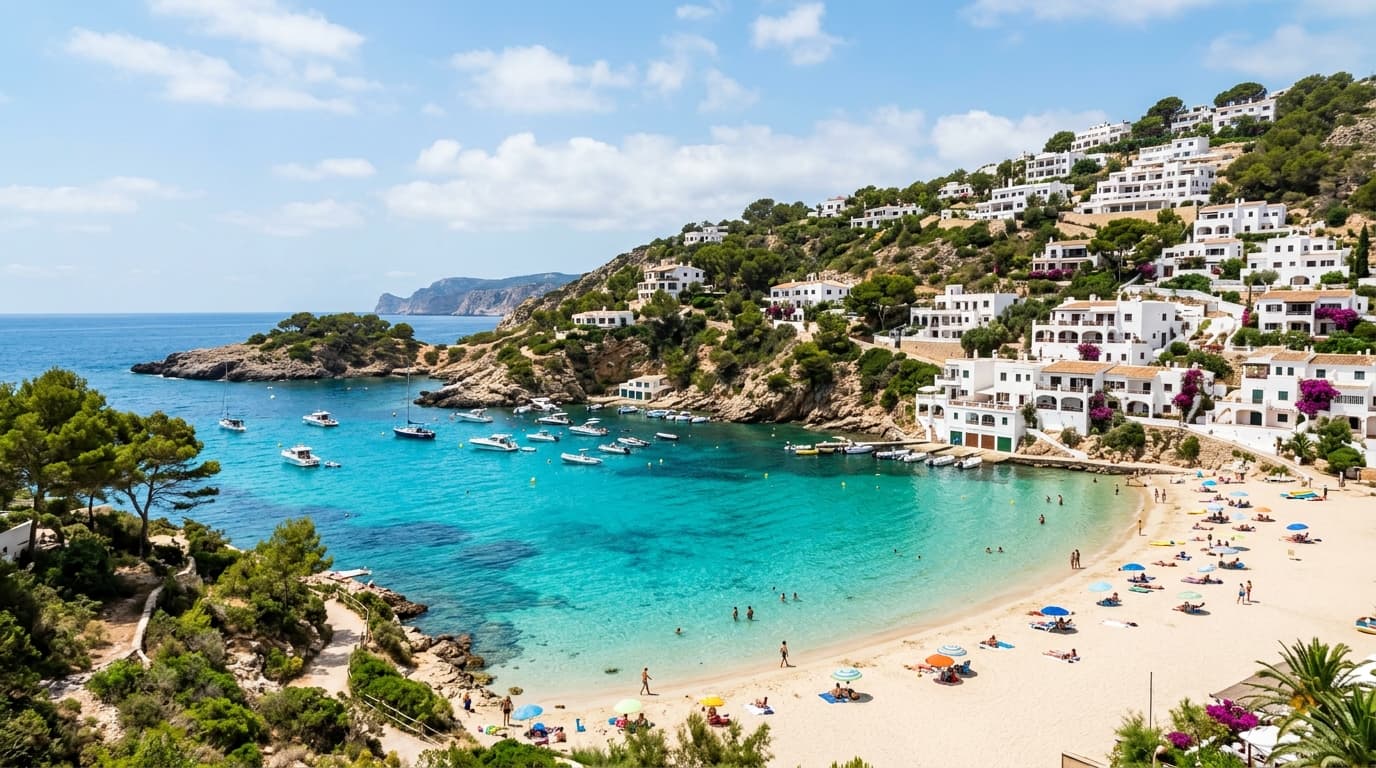
Menorca
Menorca is the antithesis of mass tourism — a tranquil, unspoiled island designated as a UNESCO Biosphere Reserve in 1993. While Mallorca and Ibiza draw the crowds, Menorca offers something increasingly rare in the Mediterranean: pristine, undeveloped beaches accessed by country paths, ancient prehistoric stone monuments (the Talayotic culture), and a slower pace of life. The island's two main towns — the British-influenced Mahón (with Europe's second-largest natural harbor) and the medieval Ciutadella — each have distinct characters. The 185km Camí de Cavalls coastal path circles the entire island.
Beaches
Cala Macarella & Macarelleta
Twin turquoise coves framed by pine-covered cliffs, consistently ranked among the Mediterranean's most beautiful beaches. Macarelleta is the smaller, more intimate of the two.
Cala Mitjana
A secluded cove reached via a beautiful coastal walk, with crystal-clear water and a narrow entrance framed by rocky cliffs. A connecting path leads to the tiny Cala Mitjaneta.
Cavalleria
A wild, north-facing beach with reddish sand and dramatic waves. One of the few beaches that captures the windswept, wilder character of Menorca's northern coast.
Activities
Walk the Camí de Cavalls
A historic 185km trail that circles the entire island, originally used for coastal defense. It can be walked in stages, with each section offering different landscapes from cliffs to coves to farmland.
Visit Talayotic Sites
Menorca has over 1,500 prehistoric stone monuments from the Talayotic culture (1500-123 BC). The taula at Torre d'en Galmés and the naveta at Es Tudons are the most impressive.
Kayaking the Coast
Sea kayaking is one of the best ways to explore Menorca's hidden coves and sea caves. Guided tours depart from various points around the island.
Budget Information
Book Hotels in Menorca
Find the best deals on island accommodation.
Affiliate links