Two Weeks in Southern Spain: Region by Region
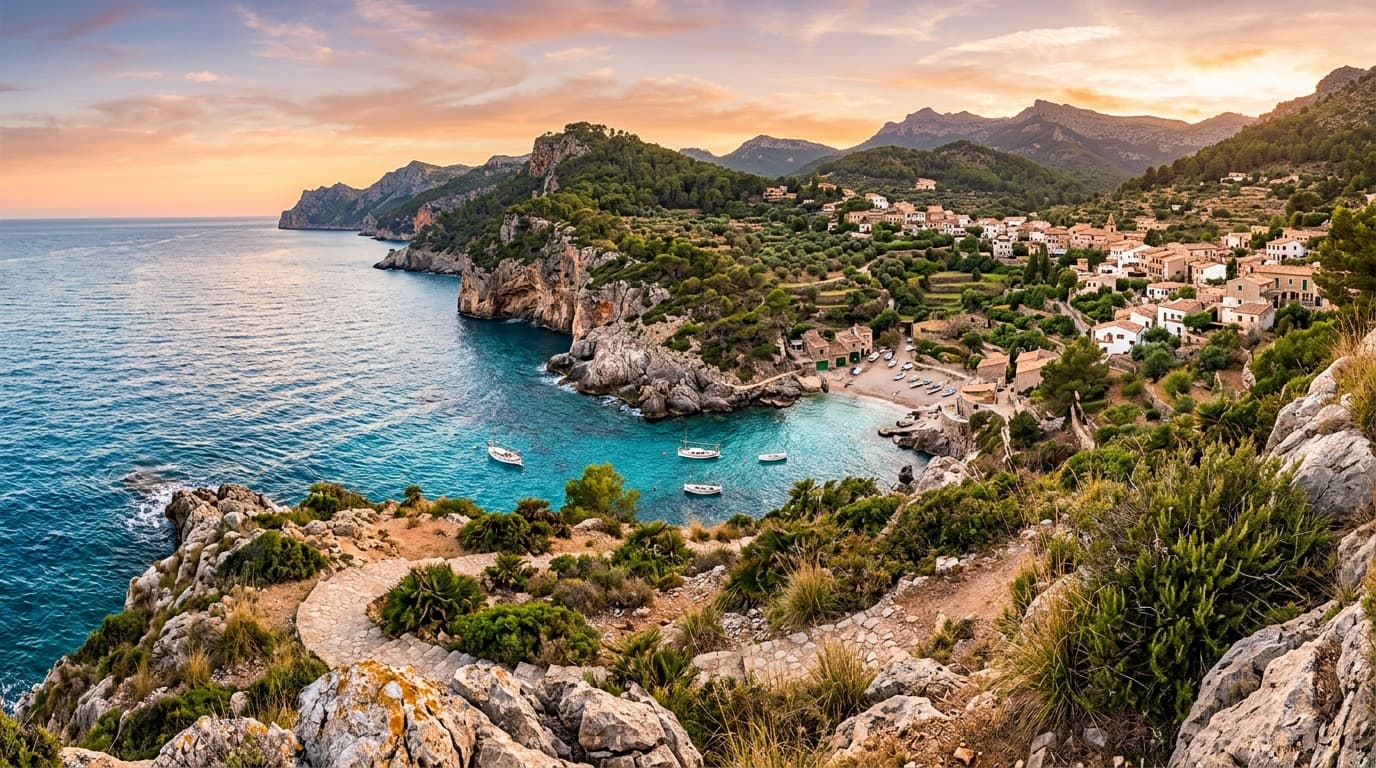
When we first arrived in southern Spain, we spent three weeks driving between Seville and the Mediterranean, stopping in villages most tourists miss. Two weeks is the sweet spot—long enough to feel the rhythm of Andalusian life, short enough to stay focused. This guide breaks southern Spain into manageable regions, each with its own character, and shows you exactly how to spend your time.
This article may contain affiliate links — we earn a small commission at no extra cost to you.
Key Takeaways
| Question | Answer |
|---|---|
| Best time to visit? | April–May or September–October (20–28°C, fewer crowds than summer) |
| How to get around? | Rental car for flexibility; trains connect major cities cheaply |
| Budget per day? | €60–100 (budget), €120–200 (mid-range), €200+ (luxury) |
| Which regions in 2 weeks? | Seville (3 days) → Córdoba (2 days) → Granada (3 days) → Costa del Sol (4 days) |
| Visa requirements? | EU/EEA citizens: ID card. Others: check visa requirements |
| What to pack? | Sun protection, comfortable walking shoes, light layers for evening |
1. Seville: The Heart of Andalusia
Seville is where southern Spain reveals itself most dramatically. The Guadalquivir River winds through the city like a spine, and the architecture swings between Moorish palaces and baroque churches. We spent our first visit overwhelmed; on the second, we understood why locals call it home.
What to See & Do
Real Alcázar is the obvious starting point—a 14th-century palace that inspired Game of Thrones sets. The gardens alone justify 2–3 hours. Entrance is around €13.50 per person; arrive by 9 a.m. to beat crowds.
Cathedral and Giralda Tower dominate the skyline. The cathedral is Europe's largest by area, and climbing the Giralda (the bell tower) gives you unobstructed views across the orange-tiled roofs. Tickets cost €5 for the tower alone, €13 combined.
Triana neighborhood is where flamenco lives. The narrow streets pulse with guitar shops, tapas bars, and dance studios. We watched a spontaneous performance in a bar called Casa Morales one evening—no tourist trap, just locals and a guitarist who'd been playing for 40 years. Drinks cost €3–5.
Plaza de España is a 1920s monument to Spanish regionalism. Walk the tiled bridges, rent a rowboat (€8 per person, 30 minutes), or simply sit with a coffee and watch the light change.
For deeper context on what to experience, our Seville travel guide covers neighborhoods, restaurants, and day trips in detail.
Where to Stay
Budget travelers: Hostels in Triana or Santa Cruz run €20–35 per night. Mid-range: Boutique hotels near the cathedral, €80–150. Luxury: Palaces converted to five-star hotels, €250+.
We recommend staying in Triana or Santa Cruz (the old Jewish quarter). Both are walkable, atmospheric, and close to everything.
How Long?
3 days minimum. Day 1: Cathedral, Giralda, Real Alcázar. Day 2: Triana, flamenco, tapas crawl. Day 3: Plaza de España, day trip to Córdoba, or explore the neighborhoods at your own pace.
2. Córdoba: Roman Bridges and Moorish Mosques
Córdoba feels smaller, quieter, and older than Seville—which is saying something. The Mezquita (Great Mosque) is one of Spain's most important Islamic monuments, and the old town's maze of whitewashed streets rewards wandering.
What to See & Do
La Mezquita is the centerpiece. Built in 784 and expanded over centuries, it's a forest of red-and-white striped arches. The Christian cathedral was later built inside, creating an odd but powerful hybrid. Entry is €15; allow 1.5–2 hours. The light through the windows at sunrise is extraordinary—arrive early.
Roman Bridge (Puente Romano) crosses the Guadalquivir and dates to the 8th century. Walk it at sunset; the reflection in the water is postcard-perfect without feeling staged.
Jewish Quarter (Judería) is a warren of narrow streets, flower-filled patios, and small museums. The Synagogue of Córdoba (€4.50) is modest but moving. We got lost here deliberately and found a family-run restaurant serving espinacas con garbanzos (spinach with chickpeas) for €8.
Palacio de Viana is a Renaissance palace with 14 courtyards. It's less famous than the Alcázar but equally stunning, and far fewer tourists. €8 entry.
For comprehensive regional context, check our Andalusia road trip guide for multi-day itineraries.
Where to Stay
Córdoba is compact; anywhere in the old town works. Budget: €25–40. Mid-range: €70–120. The city empties after 6 p.m., so evening walks are peaceful.
How Long?
2 days. One full day for La Mezquita, the bridge, and the Judería. The second day can be a half-day before moving on, or spent on a day trip to nearby Montilla (wine region) or Priego de Córdoba (white village).
3. Granada: Where Mountains Meet Moorish History
Granada sits at 680 meters elevation, cradled by the Sierra Nevada. The Alhambra palace is the main draw, but the city's real magic is in the Albaicín (old Moorish quarter), where steep streets lead to sudden viewpoints over the valley.
What to See & Do
Compare hotels, paradores, and boutique stays across Spain with free cancellation on most bookings.
Search Hotels on Booking.comThe Alhambra needs no introduction, but context helps. It's the best-preserved Islamic palace in Europe. Book tickets online weeks ahead (€16 for the palace, gardens, and Generalife summer palace combined). Allow 3–4 hours. The Nasrid Palaces are the highlight—the detail in every tile, every arch, every fountain is staggering.
Albaicín neighborhood is where we spent our favorite evening. Narrow streets, some barely wide enough for two people, wind upward. Stop at Mirador de San Nicolás for sunset views of the Alhambra with the Sierra Nevada behind it. The light turns the palace pink and gold. It's free, crowded, and worth every minute.
Cathedral and Royal Chapel are Granada's Christian monuments. The chapel holds the tombs of the Catholic Monarchs. €6 entry.
Sacromonte Abbey sits on a hillside above the city. It's a working monastery carved into caves. The views are extraordinary, and it's far less crowded than the Alhambra. €4 entry.
Our Granada travel guide digs deeper into neighborhoods, food, and lesser-known sites.
Where to Stay
Albaicín is atmospheric but steep and noisy. Realejo (the former Muslim quarter) is more relaxed. Budget: €25–40. Mid-range: €80–150.
How Long?
3 days minimum. Day 1: Alhambra (book ahead). Day 2: Albaicín, Mirador de San Nicolás, Cathedral. Day 3: Sacromonte, day trip to Las Alpujarras (mountain villages), or explore at leisure.
4. Costa del Sol: Beaches, Pueblos Blancos & Mountain Villages
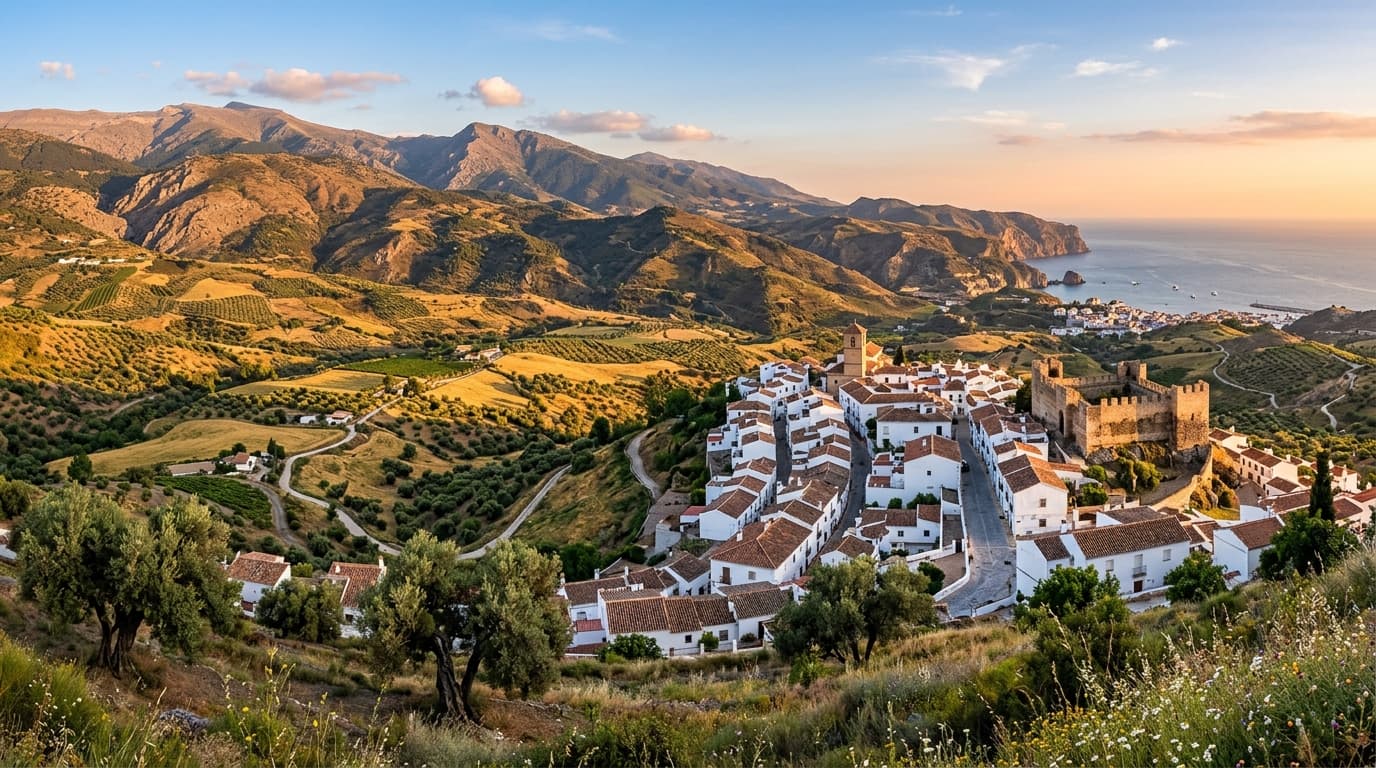
The Costa del Sol has a reputation as overdeveloped and touristy. Parts of it are. But venture inland to the white villages (pueblos blancos) and you'll find something entirely different.
What to See & Do
Málaga city is worth 1–2 days. The Alcazaba fortress overlooks the port (€3.60 entry). The Picasso Museum costs €9 and is excellent. The beaches are decent, and the old town has genuine character. We had the best espresso of our trip at a café near the Cathedral—€1.50, perfectly pulled.
Ronda is the star of the inland pueblos blancos. Perched on a gorge, it's dramatic and walkable. The bullring (Plaza de Toros) is one of Spain's oldest. €7 entry. The viewpoint near the bridge is free and stunning.
Nerja is a small beach town 50 km east of Málaga. Less crowded than Torremolinos, with a genuine beach culture. The Caves of Nerja (Cuevas de Nerja) are spectacular—€13 entry, 45-minute tour.
Mijas Pueblo is a white village in the hills above the coast. Narrow streets, donkey rides (if that's your thing), and views to the Mediterranean. It's touristy but charming.
Frigiliana is smaller and less touristy than Mijas. Sugar cane fields surround it, and the village itself is a maze of whitewashed houses and flower pots. Free to explore.
For a deeper dive into the region, our Málaga travel guide covers neighborhoods, beaches, and dining.
Where to Stay
Málaga: Budget €25–40, mid-range €80–150. Ronda: €30–50 budget, €100–180 mid-range. Nerja: €25–45 budget, €90–160 mid-range.
We recommend basing yourself in Málaga or Ronda and taking day trips. Both have good transport connections.
How Long?
4 days. Day 1: Málaga city. Day 2: Ronda. Day 3: Nerja or Frigiliana. Day 4: Beach time or another pueblo blanco.
5. Cádiz Province: Atlantic Coast & Sherry Country
If you have extra time, Cádiz Province offers something different—Atlantic beaches, sherry wine, and a slower pace than the Mediterranean.
What to See & Do
Cádiz city is Spain's oldest continuously inhabited city (founded 1100 BC). The old town is compact and walkable, with narrow streets and a genuine working-port feel. The Cathedral is stunning (€6 entry). The beaches are long and sandy. It's less touristy than you'd expect.
Jerez de la Frontera is sherry country. Visit a bodega (winery) for a tour and tasting. Many offer 1-hour tours for €15–25, including a glass or two. We visited González Byass, which is large but well-organized. Smaller bodegas like Tío Pepe are more intimate.
Arcos de la Frontera is a white village perched on a cliff above the Guadalete River. The old town is tiny and steep, but the views are extraordinary. Free to explore.
Where to Stay
Budget: €25–40. Mid-range: €80–150.
How Long?
2–3 days if you have time. Cádiz and Jerez can be visited as day trips from Seville or as a separate loop.
6. Food & Drink: What to Eat in Southern Spain
Southern Spanish food is simple, seasonal, and built around olive oil, seafood, and jamón ibérico.
Regional Specialties
Skip the hassle -- book Spain day trips, flamenco shows, and experiences in advance with instant confirmation.
Browse Activities on KlookGazpacho (cold tomato soup) is summer food. €3–5 per bowl. Salmorejo is thicker, from Córdoba, topped with jamón and egg. Espinacas con garbanzos (spinach with chickpeas) appears everywhere. Rabo de toro (oxtail stew) is winter comfort food.
Pescaíto (fried fish) is coastal. In Málaga and Cádiz, order it at a chiringuito (beach bar) for €8–12. Espetos (grilled sardines on a stick) are even cheaper—€3–5.
Jamón ibérico is the crown jewel. A plate of jamón ibérico de bellota (acorn-fed) costs €15–25 at a restaurant, €8–12 at a market. The difference in quality is profound.
For deeper exploration, our Spanish food guide covers regional dishes, markets, and dining customs.
Where to Eat
Avoid restaurants near major tourist sites. Instead, eat where locals eat: small bars in residential neighborhoods, markets, and family-run restaurants. Lunch (1–3 p.m.) is the main meal and often cheaper than dinner. A three-course menu del día (set lunch) costs €10–15 and includes a drink.
Drinks
Fino and manzanilla (dry sherries) are the regional drinks. A glass costs €2–4. Tinto de verano (red wine with lemonade) is refreshing summer drinking. Horchata con churros (sweet rice drink with fried pastries) is a snack, not a meal—€3–5.
For wine enthusiasts, our wine regions guide covers Jerez, Montilla-Moriles, and other southern producers.
7. Getting Around: Transport & Logistics
By Train
Renfe (Spain's national rail company) connects major cities cheaply and efficiently. Seville to Córdoba: €15–25, 45 minutes. Córdoba to Granada: €25–40, 3 hours. Granada to Málaga: €15–25, 3 hours. Book online at renfe.com for discounts.
For detailed guidance, check our train travel guide.
By Car
A rental car gives you flexibility for pueblos blancos and smaller villages. Budget €30–50 per day. Fuel is around €1.50 per liter. Parking in city centers is paid (€1–2 per hour) but manageable. Toll highways (autopistas) cost €5–20 depending on distance.
By Bus
Long-distance buses are cheap (€10–30 between cities) but slower. Useful for budget travelers.
Getting There
International flights land in Málaga (AGP), Seville (SVQ), or Granada (GRX). Málaga is the busiest and often cheapest. From Málaga airport, trains to the city center cost €3.20, 15 minutes.
For visa and entry requirements, see our visa guide.
8. When to Visit: Weather & Seasons
Best Time: April–May & September–October
Temperatures: 20–28°C. Crowds are moderate. Prices are lower than summer.
Summer (June–August)
Temperatures: 30–38°C. Crowds are massive. Prices are highest. The heat in inland cities like Córdoba and Granada is intense.
Winter (December–February)
Temperatures: 8–15°C. Rain is possible. Crowds are minimal. Prices are lowest. Snow in the Sierra Nevada is possible but rare in the cities.
For detailed seasonal guidance, our best time to visit Spain guide covers all regions.
9. Practical Information & Preparation
Money & Costs
Southern Spain is cheaper than Barcelona or Madrid. Budget travelers can eat and sleep for €40–60 per day. Mid-range travelers should budget €100–150. Luxury travelers: €250+.
ATMs are everywhere. Credit cards are accepted in most places, but small bars and markets prefer cash.
Language
Book buses, trains, and transfers between Spanish cities easily online. Compare routes and prices.
Book Transport on 12GoEnglish is spoken in tourist areas but not universally. Learn basic Spanish phrases. A phrasebook or translation app helps.
Connectivity
Get an eSIM before you arrive for seamless data. See our eSIM guide for options.
Insurance
Travel insurance is recommended. See our travel insurance guide for options.
Practical Details
Pharmacies (farmacias) are marked with a green cross. Supermarkets close on Sundays in smaller towns. Dinner is typically 8–10 p.m. Siesta (2–5 p.m.) is still observed in smaller towns.
For more, check our practical information guide.
10. Sample Two-Week Itinerary
Days 1–3: Seville
- Day 1: Arrive, explore Santa Cruz, dinner in Triana
- Day 2: Real Alcázar, Cathedral, Giralda
- Day 3: Plaza de España, flamenco, tapas crawl
Days 4–5: Córdoba
- Day 4: La Mezquita, Roman Bridge, Judería
- Day 5: Palacio de Viana, day trip to a white village, or travel day
Days 6–8: Granada
- Day 6: Alhambra (book ahead)
- Day 7: Albaicín, Mirador de San Nicolás, Cathedral
- Day 8: Sacromonte, or day trip to Las Alpujarras
Days 9–14: Costa del Sol & Inland
- Day 9: Travel to Málaga, explore the city
- Day 10: Ronda (day trip or overnight)
- Day 11: Nerja or Frigiliana
- Day 12: Beach day in Málaga or Nerja
- Days 13–14: Flex days—revisit a favorite place, explore a new pueblo blanco, or relax
This itinerary is flexible. Swap regions, extend stays, or skip places based on your interests.
Did You Know?
The Alhambra's name comes from the Arabic "al-hamra," meaning "the red one"—referring to the color of its clay bricks. The palace was built over 150 years and represents the height of Islamic architecture in medieval Spain.
Regional Comparison Table
| Region | Best For | Days Needed | Budget (per day) | Vibe |
|---|---|---|---|---|
| Seville | Culture, flamenco, history | 3 | €50–100 | Energetic, historic, lively |
| Córdoba | Islamic history, quiet exploration | 2 | €45–80 | Intimate, artistic, peaceful |
| Granada | Mountain views, Alhambra, nightlife | 3 | €50–100 | Bohemian, student-friendly, dramatic |
| Costa del Sol (Málaga) | Beaches, city culture | 2 | €50–120 | Cosmopolitan, varied, accessible |
| Pueblos Blancos | White villages, hiking, authenticity | 3–4 | €40–90 | Slow, scenic, traditional |
| Cádiz Province | Atlantic beaches, sherry, history | 2–3 | €45–100 | Relaxed, maritime, less touristy |
FAQ: Two Weeks in Southern Spain
Q: Can I do this itinerary without a car? A: Yes. Trains and buses connect all major cities. You'll miss some pueblos blancos, but you can take organized day trips or taxis. Budget an extra €50–100 for transport.
Q: What's the cheapest time to visit? A: November–March (except Christmas/New Year). Expect temperatures of 8–15°C and occasional rain, but prices drop 20–40%.
Q: Is two weeks enough? A: Yes. Two weeks lets you see the major regions without rushing. Add a third week if you want to explore smaller villages or take day trips.
Q: Do I need to book the Alhambra in advance? A: Yes. Book 2–4 weeks ahead, especially in spring and fall. Walk-up tickets are rare. Book at alhambra-patronato.es.
Q: What's the best way to get from the airport to the city? A: Train is cheapest (€3–5, 15–20 minutes). Taxi is convenient (€20–30). Rental cars are useful for exploring inland but unnecessary in cities.
Q: How much should I budget for food? A: Budget travelers: €15–25 per day (menu del día, tapas, markets). Mid-range: €30–50. Luxury: €75+. Alcohol adds €5–15 per day.
Q: Is it safe to travel alone? A: Yes. Southern Spain is safe for solo travelers. Use standard precautions (don't flash valuables, avoid empty streets late at night). Women travelers report feeling safe, though catcalling exists in some areas.
Conclusion
Two weeks in southern Spain is enough to understand why people move here and never leave. You'll taste real gazpacho, see the Alhambra at sunrise, get lost in the Albaicín, drink fino in a sherry bodega, and eat jamón ibérico that tastes nothing like what you've had before.
The key is slowing down. Skip a day trip. Sit in a plaza for two hours with a coffee. Eat where locals eat. Talk to people. Southern Spain rewards wanderers more than checklist-makers.
Start planning your trip. Book your Alhambra tickets, find a flight to Málaga or Seville, and set your dates. Need more help? Explore our complete destinations guide or dive deeper with our ultimate Spain travel guide.
Ready to book? Check out our accommodation finder for hotels across all regions, or use our itinerary builder to customize your route.
Have questions? Contact us—we're here to help.
Sources & References
This article is based on first-hand experience and verified with the following official sources:

Go2Spain Team
Con base en Espana desde 2020 | Todas las 17 comunidades visitadas | Actualizado mensualmente
Somos un equipo de escritores de viajes y entusiastas de Espana que exploran el pais durante todo el ano. Nuestras guias se basan en experiencia directa, conocimiento local y fuentes oficiales verificadas.
Mas sobre nosotros →